

‘I Wish Summer Were Quarterly’

Practicing and teaching yoga, chilling in Moscow parks, writing academic papers, travelling around Russia, and volunteering—these are only a few of the things HSE international students have tried over their summer break. Now, as they are getting back to studies, the students reflect on their summer experiences in academic work, professional development, travel, and leisure.
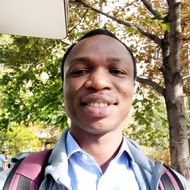
Moses Oluoke Omopekunola, from Nigeria, first-year doctoral student in the School of Education
I spent my summer in Moscow, and it had two clear legs: the study part and the fun part.
After graduating in June, I set three goals for the summer: do an internship, draft a paper for publication, and submit a conference proposal. I completed an internship on a joint project between the Centre for Psychometrics and Measurement in Education and two other HSE laboratories, focused on benchmarking professional Large Language Models (LLMs) in economics and finance. My responsibilities included writing a literature review on existing benchmarks and crafting prompts to generate professional tasks for the benchmark.
It was tougher than I expected—plenty of late nights, multiple revisions, and the kind of concentrated focus that leaves your tea cold on the desk—yet it was exactly the experience I had hoped for
One day the project coordinator contacted me asking for the results of a task. I was working on a different task from the day before, but she explained that both tasks were important and we needed to present the results in a meeting the next day. We were both awake till midnight exchanging emails, files, rounds of feedback and revisions, but we finally got it sorted and met the deadline. After the meeting, she wrote me saying, ‘Moses, the experts said the results are far better than the previous ones, so let’s continue with the work.’ I was happy for a minute then started thinking about the next round of stress and work. The internship deepened my interest in task automation—an area central to my doctoral research—and exposed me to applications beyond the STEM fields where my doctoral research is focused.
To begin engaging more deeply with my proposed dissertation topic and to stay current with articles released over the summer, I started a systematic review on the topic. The scope expanded beyond what I originally anticipated, so I wasn’t able to finish it before the end of summer, but the paper is about 80% complete
I also submitted a proposal to the National Council on Measurement in Education (NCME) annual meeting in April 2026 in Los Angeles. I’ll be presenting our study, ‘LLM-Driven Automated Item Generation for High-Stakes STEM Assessment,’ as a graduate student, something I’m excited and a little nervous about.
All work without play makes Jack (and Moses) a dull boy. Beyond academics, I dove into fun activities. One unforgettable day was a picnic at Kashirskaya Park, a gentle slice of green in the city. Students from HSE, RUDN, Sechenov, MIPT, MISIS, and others gathered for games and food.
We had an inter-university novelty football match, relay races, rope skipping, tug of war, and an egg toss
The entertainment also included sampling foods from different cultures. The serene setting and relaxed atmosphere made every moment enjoyable—perfect for a summer postcard.
I also visited friends at other universities and soaked up cool summer evenings that felt like a gentle reward after long days of reading and writing. It was a great time to relax, do something different from the usual, and create sweet memories with people. I wish summer were quarterly.

Fan Minlan, from China, graduate of the Population and Development Master’s Programme
In the beginning of the summer I was in Moscow. The temperature was very mild—I love it so much. I always went out with my husband when it was sunny. We visited museums, concerts, and parks. Our favourite place to go in summer is the Tsaritsino park.
We took some food, drinks, and a blanket and lay down under a tree on the grass with kids running here and there and ducks and squirrels walking by. This is absolutely the perfect way to spend summer in Moscow
In August I went back to my home city. Summer there is so hot—the temperature is always above 35 degrees during the day, so most of the time I stayed at home, doing my work, enjoying my mom’s food, reading books, etc.
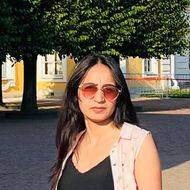
Shallu Tomar, from India, second-year student of the Population and Development Master’s Programme
This summer was full of learning, self-growth, and memorable experiences.
I decided not to travel back to India, since the summer there is very hot, and instead stayed in Moscow, where the weather is pleasant and lively compared to the cold winters
I divided my time between academics, personal well-being, professional work, and cultural exploration.
I spent time preparing for my second year at HSE and also focused on understanding how universities prepare research papers and which journals they publish in. This gave me valuable insights for my own academic path.
Every day, I devoted time to yoga practice, making sure my body and mind remain strong and prepared for the future. Yoga helped me balance between work, studies, and personal life. I also volunteered at the International Day of Yoga organised by the Embassy of India in Moscow and worked as a yoga instructor at an Ayurvedic clinic in Moscow.
I took part in different Indian cultural programmes in Moscow, making me feel close to my roots even while living abroad
I travelled to St Petersburg, which was one of the highlights of my summer. The city impressed me with its beauty, culture, and friendly people. The atmosphere there felt very different from Moscow, and this change of environment was refreshing. It was a joyful and memorable trip, and I enjoyed every moment of it.
Overall, my summer was a beautiful mix of study, self-care, cultural exchange, work, and exploration. It was not just a vacation but also a time of personal growth, where I could contribute to the community, enjoy the Russian summer, and prepare myself for the upcoming academic year.

Raissa Mujing, from the Democratic Republic of the Congo, second-year student of the Master’s Programme in Linguistic Theory and Language Description
This summer, I explored different places in Moscow that I hadn’t seen before, and I also travelled around Russia—I went to Tver and Tula.
In Tver, I spent a few days at a Christian camp in the middle of a beautiful forest, which was a very enriching experience
In Tula, I visited several places, including the Tula Defence Museum, the Tula State Museum of Weapons, and the Patriotic Park of Tula. I was curious to learn why this city is called ‘the city of weapons and gingerbread,’ and it was very interesting. It is a beautiful city—very calm and clean. I also attended a gingerbread workshop in Tula, and the bread was delicious.
The trip to Tula was organised by the HSE Student Initiative Support Centre
This summer I also spent some time improving my piano skills. Although I’m not very skilled yet, I managed to get by, and I also took a training course in makeup and beauty during the summer.
This summer was valuable because I learned new skills and discovered new places. The most memorable experiences for me were learning how to make gingerbread, spending time outdoors, and learning new things about Russian culture and history. Overall, it was a summer that gave me both rest and renewed energy to start the academic year.
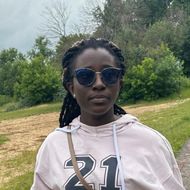
Celestina Adu, from Ghana, second-year student of the Master’s programme in Economics and Economic Policy
My summer vacation began with an outing with friends at Borisovskye Prudy Park; the natural environment was conducive for relaxing and having fun. Days after the outing, I started working on my thesis and having online meetings with my supervisor, Prof. Dmitry Veselov. I had a presentation on my thesis at the V International Scientific Conference ‘Interaction. Integration. Inclusion: From Reflection to Action,’ where I presented on the topic ‘Skill-Biased Technological Change and Educational Incentives.’ In the course of the summer, I had the opportunity to work as a research intern at the Laboratory for Labour Market Studies under Dr Ilya Kukaev. During that period, I gained a lot of knowledge in research and have developed more interest in working with him as the school resumes.
I also worked a part-time job at Shokoladnitsa. Working there was fun; I had to go to different shops in different places, giving me the opportunity to travel around Moscow
Some of the places had very beautify scenery, which was a great experience. I got lost many times trying to figure out the location of a shop, but the experience was great. It gave me chance to communicate with the local people and ask for assistance.
See also:

Eighth International U4U Online Seminar Unites Experts from 14 Countries
The HSE Online Campus hosted a two-day international U4U (Universities for Universities) seminar, which traditionally serves as a platform for exchanging expertise in online learning. This year, the event has reached a global scale, attracting international experts and representatives of universities from around the world. Together, they discussed key challenges and strategies for the development of online education. The online meeting was held in mid-November.
‘Keep Working, Keep Publishing—Consistency Matters’
Ziyuan Zhu, from Beijing, China, is an international PhD student at the Institute for Public Administration and Governance at HSE University in Moscow. In this interview with the HSE News Service, Ziyuan talks about how studies can influence one’s outlook on life, comparing public service models in different countries, and why being a Chinese student in Russia is advantageous in research.
HSE University–St Petersburg Signs Three Cooperation Agreements with Leading Indian Universities
A delegation from HSE University–St Petersburg has signed cooperation agreements with key educational institutions in India during a visit to the country. Among the projects are new programmes for academic exchange and mobility.
Under a Blooming Magnolia: How Russian and Chinese Scientists Create Solar Cells of the Future
Schola continues to introduce the winners of the International Academic Cooperation competition. In today's issue, Professor Andrey Vasenko, Deputy Head of the Scientific and Educational Laboratory of Quantum Nanoelectronics at Tikhonov Moscow Institute of Electronics and Mathematics (MIEM), speaks about the joint project between his laboratory and the Peking University research team— ‘Engineering of highly efficient and stable perovskite solar cells.’
Graduate School of Business MBA Students Take Part in Offsite Module in China
MBA students of the HSE Graduate School of Business HSHSE have recently completed the international component of their studies at the School of Economics and Management at Tsinghua University. The module focused on developing business through innovation. The participants discussed the impact of new technologies on corporate structures and visited companies operating in robotics and renewable energy.
‘India Can Be Very Colourful and Festive’
HSE University's Faculty of World Economy and International Affairs hosted a celebration of the Indian holiday Diwali, which symbolises the triumph of light over darkness and good over evil. Guests were immersed in the authentic atmosphere of India, learning about Diwali’s traditions and symbols, participating in national dances, and taking part in mehendi workshops, rangoli art with rice, and paper lanterns making. The event was organised as part of the ‘Holidays of the Peoples of the East’ project.
Meeting with Xinhua Delegation: Discussion on Contemporary Journalism at HSE
On October 22, 2025, HSE University hosted an open meeting with representatives of the Chinese news agency Xinhua, led by Sun Zhiping, Chief of Staff to the Director General. Participants discussed current challenges in journalism and the operational specifics of news agencies in today’s media landscape. Many students took the opportunity to ask questions and practise speaking Mandarin. The visit was organised by the Faculty of World Economy and International Affairs in collaboration with the HSE Institute of Media and the TASS news agency.
HSE Participates in Conference on International Exchange of Professionals in China
From October 21 to 24, 2025, the 23rd Conference on International Exchange of Professionals took place in Shanghai and Beijing, bringing together more than 7,000 scientists and experts from around the world. HSE University was represented by Ivan Arzhantsev, Dean of the Faculty of Computer Science, and Vasily Gromov, Head of the Laboratory for Semantic Analysis of the Centre for Language and Semantic Technologies.
HSE University–St Petersburg to Create Joint Continuing Education Programmes with Indian Business School
A delegation from the Institute for Continuing Professional Education at HSE University–St Petersburg discussed new cooperation formats with the Indian Institute of Management Indore (India). The partnership opens up new opportunities for HSE University–St Petersburg to create interdisciplinary programmes with strong practical elements and immersion in the business cultures of the Asian region.
‘Everyone Who Sees HSE University on My CV Says: “You Must Be So Smart!”’
On October 9–10, the first-ever HSE International Alumni Reunion brought together graduates from various cohorts and programmes—now working in Russia and abroad—along with representatives of HSE University and its industry partners. The event included a tour of the campus, a business game, and a cultural festival. The participants exchanged experiences, reflected on their career paths, and discussed labour market challenges.