

Achieving Financial Independence: Experts Discuss Development of BRICS National Currency Settlements

How can BRICS countries move away from the dollar in international settlements, and what can they do to advance this goal today? These questions were discussed by experts during a round table at HSE University. The event was organised by the Multilateral Strategic Projects Office together with the HSE Faculty of World Economy and International Affairs as part of HSE’s activities within the BRICS Network University and the Joint Basic Research Projects ‘International Academic Cooperation of HSE University.’
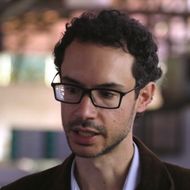
Bruno de Conti
Despite efforts to introduce new currencies into international trade, the dollar is still used in 88% of transactions, noted Bruno de Conti, Professor of Economic Theory at the University of Campinas. This means that only 12% of transactions are conducted in national currencies. ‘The South African rand accounts for 1%, the Brazilian real has the same share, and due to sanctions, there are virtually no transactions in roubles. These figures are negligible compared to BRICS’ importance to the global economy,’ he said. Active steps to challenge the dollar’s dominance are being taken, particularly in China: the share of the Chinese yuan has risen from almost zero in 2007 to 7%. ‘There are bilateral initiatives within BRICS, and this is important especially now that BRICS is expanding,’ Bruno de Conti added.
He quoted Brazilian President Luiz Inácio Lula da Silva, who said in 2023 that he constantly wonders why all countries are forced to support the dollar instead of trading in their own currencies. According to the scholar, changing the situation requires addressing internal BRICS challenges—such as inertia and the difficulty of reconciling diverse national interests. Overcoming internal disagreements and strengthening digitalisation are essential steps forward.

Alexandra Morozkina
Alexandra Morozkina, Associate Professor at the HSE Faculty of World Economy and International Affairs, noted that the use of BRICS currencies in international trade is expanding. The share of the yuan in China’s international trade increased from 15% in 2021 to 28% in 2024. ‘The share of the rouble in total Russian exports grew from 12% in 2022 to 41% in 2024,’ she said. In 2023, a landmark deal took place: the yuan was used for the first time to settle oil transactions between the UAE and China. Increasing the liquidity of national currencies is a step towards de-dollarisation, and BRICS is gradually building the necessary infrastructure for it. ‘The BRICS Grain Exchange is also a step towards setting prices in BRICS currencies,’ Alexandra Morozkina explained.

Alexey Ponomarenko
Alexey Ponomarenko, Professor at the HSE Joint Department with the Bank of Russia, presented a concept for creating a closed international settlement system and discussed in detail models for such settlements, using the Mariana Project as an example. He pointed out that in designing such a system, the requirements for a single technical settlement unit are minimal, meaning that no specific changes to the monetary systems of participating countries would be necessary. Prof. Alexey Ponomarenko emphasised the importance of automatically determining exchange rates—a mechanism that could naturally regulate payment flows.
The round table was moderated by Olga Biryukova, Associate Professor at the HSE Faculty of World Economy and International Affairs. Anastasia Vyskubina, Head of the Online Project Support Department at HSE University, also took part in the discussion.

See also:

Scientific Expedition to Hainan: HSE Scientists Organise Conference on Statistical AI in China
The Statistical AI Conference was held in Sanya, Hainan Island, China, from 24 to 28 August 2026. The international event brought together leading experts in statistics, machine learning, and applied AI. Alexey Naumov, Director of the AI and Digital Science Institute at the HSE Faculty of Computer Science, and Sergey Samsonov, Head of the International Laboratory of Stochastic Algorithms and High-Dimensional Inference, were among the conference organisers.
HSE University to Present Its Projects at the International Youth Festival
The International Youth Festival (IYF) will be held in Yekaterinburg from 11 to 17 September 2026. HSE University will take an active part in the event. The university's booth will present a space settlement mock-up, robots, and the iFORA big data analysis system. Fifty HSE students will visit festival venues, and experts will participate in the business programme.
HSE University Expands Cooperation with Malaysia in Technology Foresight
HSE University researchers will take part in a study of the future of engineering education in Malaysia, while the Malaysian Industry-Government Group for High Technology (MIGHT) will use the iFORA big-data analysis system to validate the findings of its foresight research. These are the outcomes of a visit by HSE representatives to Kuala Lumpur.
Researchers Assess Contributions of BRICS Countries to Leading ML/AI Conferences
The HSE Scientometrics Centre analysed more than 104,000 papers published between 2020 and 2025 and presented at ten top-level A* conferences ranked by ICORE 2026. The researchers examined the contributions of Brazil, Russia, India, China and South Africa. Together, these countries accounted for around 40,800 publications, or 39.2% of the total. However, the distribution is highly uneven, and a shared BRICS research space has yet to emerge.
Biologists Discover 'Molecular Fingerprint' of Preeclampsia
Researchers at HSE University employed a new method to model hypoxia in placental cells during pregnancies complicated by preeclampsia and identified molecular markers of tissue hypoxia. Since hypoxia is one of the key mechanisms underlying preeclampsia, these findings are important for a more accurate and timely diagnosis of the disease and for the development of effective treatment methods. The paper has been published in Placenta.
‘Hedgehog’ Versus ‘Relatives’: Researchers Measure How the Brain Responds to Unexpected Words During Natural Speech
Russian neurophysiologists, including researchers from HSE University, have demonstrated the feasibility of using event-related fields (ERFs) to study brain activity during natural speech perception. The researchers showed that this approach can be applied not only to individual words but also to continuous speech. Their findings indicate that words whose meanings differ significantly from the preceding context require longer processing times. The study also reveals that the brain processes function words in two stages: first, it identifies their grammatical role and then uses this information to predict the next word. The study has been published in Frontiers in Human Neuroscience.
Scientists Develop Algorithm for More Reliable Processors in Data Centres
Researchers from HSE MIEM and Samara University have developed the LRF-3D algorithm to automatically bypass idle nodes in three-dimensional networks-on-chip. Thanks to its hierarchical architecture, the algorithm outperforms existing solutions in both speed and path accuracy, improving processor reliability for use in data centres, supercomputers, and AI computing. The source code and test results are publicly available.
Researchers Rank Recommendation Algorithms Using Sports Tournament Model
Researchers from the AI and Digital Science Institute at the HSE Faculty of Computer Science have developed an approach for selecting recommendation algorithms more effectively. Their approach uses pairwise comparisons of algorithms to create a tournament table, with the overall ranking based on their performance across all datasets in the tournament. This can reduce the number of algorithms that need to be tested when developing new services, saving both time and money. The study was presented at the 32nd ACM SIGKDD Conference on Knowledge Discovery and Data Mining (KDD 2026).
Researchers Develop Method for Direct Generation of Regulatory DNA
Researchers at HSE University have developed a model for generating promoters and enhancers—DNA sequences that regulate gene activity. The model works directly with DNA nucleotides, without first transforming them into a continuous numerical representation. This solution could be useful for applications in synthetic biology and gene therapy. The study results were presented at the ICLR 2026 Workshop ‘Generative AI in Genomics (Gen^2): Barriers and Frontiers.’
Researchers at HSE University and Sber Train Neural Networks to Better Predict User Preferences
The HSE FCS AI and Digital Science Institute and Sber have introduced a new architecture for recommendation systems that combines two classes of models, enabling algorithms to better predict users’ interests and needs. A preprint of the paper has been published on arxiv.org and presented at Urban ML.