

How Neural Networks Detect and Interpret Wordplay: New Insights from HSE Researchers

An international team including researchers from the HSE Faculty of Computer Science has presented KoWit-24, an annotated dataset of 2,700 Russian-language Kommersant news headlines containing wordplay. The dataset enables an assessment of how artificial intelligence detects and interprets wordplay. Experiments with five large language models show that even advanced systems still make mistakes, and that interpreting wordplay is more challenging for them than detecting it. The results were presented at the RANLP conference; the paper is available on Arxiv.org, and the dataset and the code for reproducing the experiments are available on GitHub.
Wordplay refers to deliberate use of language that violates linguistic norms in order to attract attention, entertain, or amuse the reader. It is common in Russian news headlines and can take various forms. For example, the headline ‘Osobo bumazhnye persony’ plays on the phrase ‘Osobo vazhnye persony’ (Russian for ‘very important persons’). The word vazhnye (‘important’) is replaced with bumazhnye (‘paper-related’), which rhymes with the original and shifts the meaning toward the topic of paper production. Another example is ‘Kod naklikal,’ the headline of an article about open-source code. It closely resembles ‘kot naplakal,’ an idiom meaning ‘very little,’ thereby creating a humorous ambiguity.
For human readers, such wordplay in headlines is immediately apparent and requires no explanation. However, large language models such as ChatGPT or GigaChat Max are often at a loss, struggling not only to detect the wordplay but even more so to explain the joke. One reason for this difficulty is the limited humour datasets on which LLMs are trained. In most cases, humour in these datasets is represented by canned internet jokes explicitly labelled as ‘jokes,’ which is insufficient for the models to learn why something is funny. In addition, such datasets contain almost no annotation—there are no machine- or human-readable layers of description indicating whether wordplay is present, what type of technique is used, what the headline refers to, and so on.
Researchers from the HSE Faculty of Computer Science, in collaboration with colleagues from IT:U—Interdisciplinary Transformation University Austria—and independent researchers, have created KoWit-24, a dataset dedicated to wordplay. It comprises 2,700 headlines from the Russian business daily Kommersant published between January 2021 and December 2023, along with contextual information: each headline is accompanied by a short description of the news story (the lead) and a summary. For each instance of wordplay, the authors manually annotated the type of technique, identified the anchors—the words that trigger the wordplay—and, where possible, linked the original expressions to relevant Wikipedia articles.
The authors adopted linguist Alan Scott Partington’s definition of wordplay, according to which wordplay occurs when the same expression can be interpreted in at least two ways and this effect is intentional. Wordplay can arise in several ways. One case involves ambiguity inherent in a word or its sound. For example, in the headline ‘Volgu ne mogut zastavit’ tech’ bystree,’ the word Volgu (Volga) refers both to the river and to a federal highway with the same name. Another case involves a slight modification of a well-known phrase or title, in which the author alters the wording while relying on the reader to recognise the original and complete the joke. For instance, ‘Missiya sokratima’ alludes to ‘Missiya nevypolnima,’ the Russian title of the film Mission: Impossible, while the headline itself suggests that a diplomatic mission can be downsized.
The researchers also distinguished ‘nonce words’—coined for a single occasion—and oxymorons, which combine two contradictory meanings. This approach not only allowed them to collect and describe examples but also to compare the performance of different language models.
After annotation, the authors tested the dataset on five LLMs: GPT-4o, YandexGPT-4, GigaChat Lite, GigaChat Max, and Mistral NeMo. Each model was provided with a headline and the corresponding news lead and asked to perform two tasks: first, to determine whether the headline contained wordplay, and second, to interpret it by identifying the original phrase or reference. The researchers compared the effects of two types of prompts: a simple prompt asking whether the headline contained wordplay, and an extended prompt providing a definition along with examples of different wordplay types. The extended prompt improved performance on the detection task for three of the five models, while GPT-4o demonstrated the strongest performance in both detection and interpretation. For all models, interpreting the source of the joke proved significantly more difficult than simply detecting the presence of wordplay.
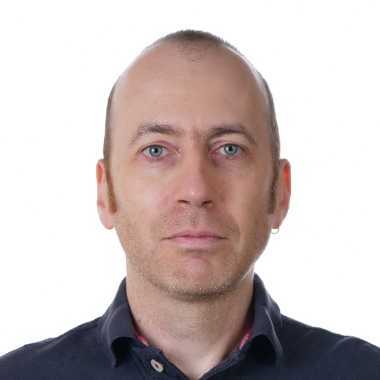
Pavel Braslavski
‘KoWit-24 addresses two key limitations of earlier datasets: it provides context for each headline and includes multi-level annotation. This transforms a collection of examples into a full-fledged “testbed” for AI. It now allows for an objective comparison of models—whether a model can detect wordplay, identify the anchor, and correctly recall the original phrase or reference. Such verifiable metrics not only allow for a more accurate evaluation of current systems but also support their intentional improvement through selection of prompts, training examples, and fact-checking strategies. In the future, we plan to investigate whether this dataset can be used to enhance humour generation,’ says Pavel Braslavski, Associate Professor at the HSE Faculty of Computer Science and co-author of the paper.
In addition, the dataset establishes a common and transparent standard for evaluation, as researchers use the same data and experimental scripts. This reduces variability in the results and helps develop models that better understand natural language, rather than merely following the logical structure of the text.

See also:

Scientists Develop Algorithm for More Reliable Processors in Data Centres
Researchers from HSE MIEM and Samara University have developed the LRF-3D algorithm to automatically bypass idle nodes in three-dimensional networks-on-chip. Thanks to its hierarchical architecture, the algorithm outperforms existing solutions in both speed and path accuracy, improving processor reliability for use in data centres, supercomputers, and AI computing. The source code and test results are publicly available.
Researchers Rank Recommendation Algorithms Using Sports Tournament Model
Researchers from the AI and Digital Science Institute at the HSE Faculty of Computer Science have developed an approach for selecting recommendation algorithms more effectively. Their approach uses pairwise comparisons of algorithms to create a tournament table, with the overall ranking based on their performance across all datasets in the tournament. This can reduce the number of algorithms that need to be tested when developing new services, saving both time and money. The study was presented at the 32nd ACM SIGKDD Conference on Knowledge Discovery and Data Mining (KDD 2026).
Researchers Develop Method for Direct Generation of Regulatory DNA
Researchers at HSE University have developed a model for generating promoters and enhancers—DNA sequences that regulate gene activity. The model works directly with DNA nucleotides, without first transforming them into a continuous numerical representation. This solution could be useful for applications in synthetic biology and gene therapy. The study results were presented at the ICLR 2026 Workshop ‘Generative AI in Genomics (Gen^2): Barriers and Frontiers.’
Researchers at HSE University and Sber Train Neural Networks to Better Predict User Preferences
The HSE FCS AI and Digital Science Institute and Sber have introduced a new architecture for recommendation systems that combines two classes of models, enabling algorithms to better predict users’ interests and needs. A preprint of the paper has been published on arxiv.org and presented at Urban ML.
Physicists Discover What Happens Inside a Stable Vortex
Large vortices with characteristic spiral arms are often observed in the atmosphere and the ocean. Physicists from HSE University have explained how these structures form and why they retain their shape. The researchers found that velocities at points located along the same vortex arc remain correlated even over long distances. At the same time, this correlation weakens rapidly with increasing distance from the vortex centre. These differences help explain the formation of spiral arms and may improve models of atmospheric and oceanic currents. The findings have been published in Physical Review Fluids.
HSE Computer Science Researchers Win Gold Medal at International Machine Learning Competition
A team comprising HSE International Laboratory of Statistical and Computational Genomics researchers Aleksei Shmelev and Nikita Chervov, 2025 graduate of the HSE Faculty of Computer Science’s Master’s programme in Data Analysis in Biology and Medicine Ivan Gevorkov, and two students from the United States achieved an outstanding result at the 2026 NeuroGolf international machine learning championship. The team won a gold medal and placed seventh overall.
‘Working with AI Solves a Wide Range of Engineering Problems’
Artificial intelligence is a working tool based on a balanced combination of algorithms and engineering. Experts and doctoral students from the HSE Moscow Institute of Electronics and Mathematics explain how AI technologies can improve an application, device, or system, and what engineering tasks are solved in the process.
‘The Peak of Stupidity’ and ‘The Valley of Despair’: HSE Economists Propose an Explanation for the Dunning–Kruger Effect
The Dunning–Kruger effect, which describes a sharp surge in self-confidence among beginners followed by an equally rapid decline as they gain experience, can be explained by the nature of the learning process and the acquisition of new knowledge. This conclusion was reached by Andrey Vorchik of the HSE Faculty of Economic Sciences together with independent researcher Murat Mamyshev. They developed a mathematical model of learning and demonstrated how subjective confidence is formed and changes as knowledge accumulates, as well as how teachers can reduce the ‘valley of despair’ experienced by learners.
Toffee and Risk: Scientists Discover Why People Who Crave Sweets Make More Impulsive Choices
Having a sweet tooth may be linked not only to eating habits but also to the way people make decisions. Researchers at HSE University have found that people with a preference for sweet foods tend to behave more impulsively—not because they want immediate rewards, but because they are less willing to tolerate uncertainty. These findings may help improve treatments for addiction. The study findings have been published in Frontiers in Psychology.
Advancing Collaboration: HSE Faculty of Computer Science and Harbin Institute of Technology Hold Joint Seminar
From July 13 to 16, 2026, the Faculty of Computer Science hosted the Russian–Sino Research Seminar on Machine Learning Applications, organised by the HSE Laboratory for Cloud and Mobile Technologies in partnership with the Harbin Institute of Technology (China). A delegation comprising seven students and three university representatives travelled to Moscow to take part in an intensive four-day programme.