

Machine Learning Links Two New Genes to Ischemic Stroke

A team of scientists from HSE University and the Kurchatov Institute used machine learning methods to investigate genetic predisposition to stroke. Their analysis of the genomes of over 5,000 people identified 131 genes linked to the risk of ischemic stroke. For two of these genes, the association was found for the first time. The paper has been published in PeerJ Computer Science.
Ischemic stroke is a major cause of death and disability worldwide. This condition occurs when blood supply to a part of the brain is interrupted, causing cell death and impaired brain function. Scientists have long studied the genetic factors influencing stroke risk, but a definitive list of genes linked to stroke predisposition has yet to be established. There are hopes that artificial intelligence methods may provide answers in this regard.
A team of scientists from the HSE Faculty of Computer Science and the Kurchatov Institute proposed using machine learning algorithms to analyse genetic predisposition to stroke. They analysed genomic data from 5,500 unrelated individuals over the age of 55, including ischemic stroke survivors and their healthy counterparts. Samples for the study were collected from 11 laboratories in Europe and 13 in the United States.
The analysis was based on the concept of ranking through learning. First, the researchers developed a predictive model in which the key parameter was the presence or absence of a stroke. Single nucleotide polymorphisms (SNPs), which are variations in the genome at specific sites, were used as markers. The scientists then ranked these markers and selected the most significant ones.
SNPs were analysed and selected using various methods, enabling a new analysis of the data and the identification of genes previously not associated with ischemic stroke. The list of 'suspicious' genetic markers common to two or more methods highlights the reliability of the results.

Working with such a large dataset—nearly 900,000 SNPs per 5,500 participants—required us to move beyond purely statistical analysis methods. Machine learning made it possible to process all of this. As a result, we identified 131 genes, most of which had already been linked to ischemic stroke. However, for two of these genes, this was the first time we discovered the association,' explains Dmitry Ignatov, Head of the Laboratory for Models and Methods of Computational Pragmatics at HSE University.
In particular, the scientists found an association between stroke and ACOT11, a gene involved in fatty acid metabolism and shown in animal experiments to affect inflammatory processes and blood lipid levels. The second gene newly linked to ischemic stroke is UBQLN1, which is involved in the mechanisms that protect cells from oxidative stress. There is evidence that a mutation in this gene is associated with neurodegenerative diseases.
These discoveries could help develop multigenic risk models that predict a person's predisposition to stroke. Information about the newly associated genes could also serve as the foundation for developing drugs and therapies aimed at reducing the risk of ischemic stroke.
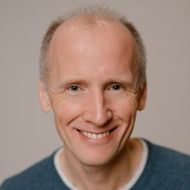
Gennady Khvorykh
'Identifying two new stroke-associated genes is an excellent outcome for any method. Our machine learning approach clearly holds strong potential for detecting genes linked to diseases that result from a variety of factors,' comments Gennady Khvorykh, Chief Specialist at the Kurchatov Institute.
The proposed approach to analysing genetic markers demonstrates versatility and can be effectively adapted for a wide range of studies beyond ischemic stroke. This methodology can be applied to any diseases or markers with data available in the 'sample—SNP—class' format.
'Although we initially developed this tool for a specific task, the results reveal its potential in a broader context. The ability to work with a variety of genetic data makes our method valuable to researchers across various fields of biology and medicine,' says Stefan Nikolić, graduate of the Faculty of Computer Science and the Doctoral School of Computer Science at HSE University.
See also:

Scientists Test Asymmetry Between Matter and Antimatter
An international team, including scientists from HSE University, has collected and analysed data from dozens of experiments on charm mixing—the process in which an unstable charm meson oscillates between its particle and antiparticle states. These oscillations were observed only four times per thousand decays, fully consistent with the predictions of the Standard Model. This indicates that no signs of new physics have yet been detected in these processes, and if unknown particles do exist, they are likely too heavy to be observed with current equipment. The paper has been published in Physical Review D.
HSE Scientists Reveal What Drives Public Trust in Science
Researchers at HSE ISSEK have analysed the level of trust in scientific knowledge in Russian society and the factors shaping attitudes and perceptions. It was found that trust in science depends more on everyday experience, social expectations, and the perceived promises of science than on objective knowledge. The article has been published in Universe of Russia.
Scientists Uncover Why Consumers Are Reluctant to Pay for Sugar-Free Products
Researchers at the HSE Institute for Cognitive Neuroscience have investigated how 'sugar-free' labelling affects consumers’ willingness to pay for such products. It was found that the label has little impact on the products’ appeal due to a trade-off between sweetness and healthiness: on the one hand, the label can deter consumers by implying an inferior taste, while on the other, it signals potential health benefits. The study findings have been published in Frontiers in Nutrition.
HSE Lecturers Awarded Yandex ML Prize 2025
The Yandex ML Prize is awarded to lecturers and heads of educational programmes who contribute to the development of artificial intelligence in Russia. This year, 10 laureates were selected from 300 applicants, including three members of the HSE Faculty of Computer Science (FCS). A special Hall of Fame award was also presented for contributions to the establishment of machine learning as an academic field. One of the recipients was Dmitry Vetrov, Research Professor at the HSE FCS.
Technological Breakthrough: Research by AI and Digital Science Institute Recognised at AI Journey 2025
Researchers from the AI and Digital Science Institute (part of the HSE Faculty of Computer Science) presented cutting-edge AI studies, noted for their scientific novelty and practical relevance, at the AI Journey 2025 International Conference. A research project by Maxim Rakhuba, Head of the Laboratory for Matrix and Tensor Methods in Machine Learning, received the AI Leaders 2025 award. Aibek Alanov, Head of the Centre of Deep Learning and Bayesian Methods, was among the finalists.
HSE Psycholinguists Launch Digital Tool to Spot Dyslexia in Children
Specialists from HSE University's Centre for Language and Brain have introduced LexiMetr, a new digital tool for diagnosing dyslexia in primary school students. This is the first standardised application in Russia that enables fast and reliable assessment of children’s reading skills to identify dyslexia or the risk of developing it. The application is available on the RuStore platform and runs on Android tablets.
Physicists Propose New Mechanism to Enhance Superconductivity with 'Quantum Glue'
A team of researchers, including scientists from HSE MIEM, has demonstrated that defects in a material can enhance, rather than hinder, superconductivity. This occurs through interaction between defective and cleaner regions, which creates a 'quantum glue'—a uniform component that binds distinct superconducting regions into a single network. Calculations confirm that this mechanism could aid in developing superconductors that operate at higher temperatures. The study has been published in Communications Physics.
Neural Network Trained to Predict Crises in Russian Stock Market
Economists from HSE University have developed a neural network model that can predict the onset of a short-term stock market crisis with over 83% accuracy, one day in advance. The model performs well even on complex, imbalanced data and incorporates not only economic indicators but also investor sentiment. The paper by Tamara Teplova, Maksim Fayzulin, and Aleksei Kurkin from the Centre for Financial Research and Data Analytics at the HSE Faculty of Economic Sciences has been published in Socio-Economic Planning Sciences.
Larger Groups of Students Use AI More Effectively in Learning
Researchers at the Institute of Education and the Faculty of Economic Sciences at HSE University have studied what factors determine the success of student group projects when they are completed with the help of artificial intelligence (AI). Their findings suggest that, in addition to the knowledge level of the team members, the size of the group also plays a significant role—the larger it is, the more efficient the process becomes. The study was published in Innovations in Education and Teaching International.
New Models for Studying Diseases: From Petri Dishes to Organs-on-a-Chip
Biologists from HSE University, in collaboration with researchers from the Kulakov National Medical Research Centre for Obstetrics, Gynecology, and Perinatology, have used advanced microfluidic technologies to study preeclampsia—one of the most dangerous pregnancy complications, posing serious risks to the life and health of both mother and child. In a paper published in BioChip Journal, the researchers review modern cellular models—including advanced placenta-on-a-chip technologies—that offer deeper insights into the mechanisms of the disorder and support the development of effective treatments.