

The Importance of a Good Diagnosis
On April 1-4, 2014 in Moscow, the HSE with support of the World Bank and the International Monetary Fund organizes the XV April International Academic Conference on Economic and Social Development. The Conference Programme Committee is chaired by Professor Evgeny Yasin.
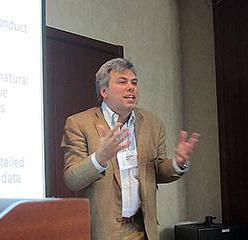 |
| Professor Sebastian Galiani |
― Will this be your first lecture at the HSE-Moscow? How did you get involved in the April Conference?
― I once gave a lecture on property rights at a conference organized at the HSE by Professor Sonin. This time I was kindly invited by Professor Yasin.
― Are the problems of inequality and poverty the same all over the world? To what extent are these economic problems, and to what extent are they social?
― There are commonalities and differences across regions — and even within regions — in terms of both the causes and consequences of poverty and inequality. Just to give an obvious example, large differences exist between the rural and urban poor. Obvious economic reasons are at the root of the cause of both phenomenon, but important behavioral aspects also contribute to their perpetuation, ceteris paribus. Poverty, obviously, varies much across the development ladder of countries.
― How important is economic growth to reduce poverty?
― In the long run, economic growth is a powerful instrument for reducing absolute poverty. Since 1820, the world’s extreme poverty rate has decreased from 85% to below 20%. In Latin America, Chile is an impressive success story in terms of poverty reduction. However, growth is not always so effective in reducing poverty, at least in the short and medium terms. In the U.S., poverty plummeted during the early 60s, which was a period of rapid economic growth. It has remained relatively stable since then, even though the U.S. economy has continued to grow and has, in fact, expanded quite swiftly since the late 1980s. This change in trend is mainly accounted for by the increase in income inequality that has taken place during this latter period.
― Inequality affects the extent to which growth affects poverty. Does it also affect economic growth?
― Inequality, per se, may also be detrimental for economic growth. When markets are missing or imperfect, the distribution of wealth and power affects the allocation of investment opportunities and, thus, detracts from the economy’s efficiency. Additionally, high levels of economic and political inequality tend to give rise to economic and political institutions that systematically favor the interests of the most influential groups.
― From what you have learned working in Latin America, do you think there are solutions to the problems of poverty and inequality that can be applied to Russia?
― Certainly, there are important lessons that we can gather from recent research, especially experimental research. We are learning much about how to better affect incentives and also about policies that work and policies that do not work as well as expected. A large part of that research is conducted in Africa and South Asia, though.
Latin America is a highly unequal region. Poverty is concentrated among informal workers, which makes redistribution more difficult. Therefore, there, the efforts have been directed at finding cost-effective policies targeted to poor households. The aim was mainly that of building up the present and future income-generation capacity of the poor. Governments have relied heavily on Conditional Cash Transfers. These instruments are useful to alleviate poverty in the short-run, and have also shown some effectiveness at inducing human capital accumulation. However, other interventions are shown to be much more effective to achieve the second objective. It is important first to have a good diagnostic of what are the problems and constraints and then to evaluate the proposed solutions.
― Would you give us an example of an intervention that seems to work and that could be relevant in Russia.
― A large body of research, both experimental and quasi-experimental, now exists that shows that early childhood interventions are cost-effective. That seems an obvious area where some of the efforts in Russia could be focused, given its level of development.
Anna Chernyakhovskaya, specially for the HSE news service
Konstantin Sonin
See also:

Stuck in the Net: How Much Time Children Spend Online
On average, a schoolchild spends 48 hours a week on studies—equivalent to a six-day working week for an adult. This was highlighted by experts at the round table ‘Domains of Children’s Well-Being Evaluation for Human Potential and Evidence-Based Social Policy Development,’ held as part of the 25th Yasin (April) International Academic Conference.
Russian and Chinese Scholars Share Experience of Transformation of Doctoral Education
The Russian and Chinese postgraduate education systems originally borrowed their institutional frameworks from the Soviet Union. However, in the 21st century, they have evolved along different paths. While key performance indicators for postgraduate programmes in Russia are declining, China is seeing a rapid increase in the number of postgraduate students. These contrasting trajectories and the reforms undertaken in each country in recent decades were the focus of a roundtable discussion held as part of the 25th Yasin (April) International Academic Conference.
Nobel Laureate Proposes Solution to Markov Equilibrium Problem
In dynamic games, a Markov equilibrium involves strategies that guide players' behaviour based on the current state of the game, rather than its entire history. This approach is effective when players have access to complete information. But when uncertainty arises in the game—for instance, when players are unsure of who they are dealing with—this approach can become problematic. Eric Maskin, Nobel Laureate in Economics and Professor at Harvard University, addressed this issue in a paper presented at the XXV Yasin (April) International Academic Conference on Economic and Social Development held at HSE University from April 15 to 18, 2025.
‘The World Is Becoming More Complex and Less Predictable’: What Scientists Say about the Future
The future is now more difficult for researchers to forecast, and events that are hard to predict are playing an increasingly significant role. But there is good news too: scientists are confident that humanity will adapt to any changes. This was the focus of discussion at the International Symposium ‘Foresight in a Rapidly Changing World,’ which took place as part of the 25th Yasin (April) International Academic Conference.
Fragmentation and Bloc Formation: How the Global Economy is Changing
Sergey Dubinin, former head of the Bank of Russia and Professor of Finance and Credit at the Faculty of Economics at Moscow State University, has delivered an honorary address at the XXV Yasin (April) International Academic Conference. He spoke about the transformation of the global monetary and financial system, as well as the Russian economy.
More Children, More Happiness: HSE Experts Study Impact of Number of Children on Russians' Assessment of Happiness
Russians with children feel happier than those without children. At the same time, the number of children influences the assessment of happiness: the more children Russians have, the happier they feel. These conclusions were outlined inthe report ‘More Children, More Happiness: The Impact of the Number of Children on Russians’ Assessment of Happiness,’ presented at the XXV Yasin (April) International Academic Conference on Economic and Social Development, held on April 15–18 at HSE University. The study was conducted by Elena Churilova, Senior Research Fellow, and Dmitry Jdanov, Chief Research Fellowat HSE International Laboratory for Population and Health.
HSE Expands Cooperation with Gulf Countries
HSE University and the Centre for International Policy Research (Qatar) have agreed to collaborate in the field of social sciences, with plans for joint research, academic exchanges, and regular expert engagement. The agreement was signed during the roundtable ‘State Capacity and State Resilience in the Global South,’ held as part of the 25th Yasin (April) International Academic Conference at HSE University.
‘We Grow Old before We Become Rich’: How BRICS Countries Can Achieve Economic Growth
Due to population aging, many countries aiming for economic prosperity have limited time left to undergo economic transformation, according to the honorary report Narratives Versus Reality on Employment and Demography: How Undermining Institutions Can Push Countries Out of the ‘Narrow Corridor’ by Santosh Mehrotra of the University of Bath. The report was presented at the XXV Yasin (April) International Academic Conference.
XXV Yasin (April) Academic Conference Kicks Off at HSE University
The anniversary 25th Yasin (April) International Academic Conference on Economic and Social Development will take place from April 15 to 18. This year, over a thousand applications were submitted to present at the conference, of which the Programme Committee selected 381 of the best research papers in their respective fields.
‘Teaching Is a Learning Experience for Me—Every Question Is an Opportunity to Update My Lecture Material’
Kemal Kivanc Akoz is an Assistant Professor of the Department of Theoretical Economics at the Faculty of Economic Sciences. He has been at HSE University for six years and his current activities include research into marriage market dynamics and information agreements among groups of agents. In this interview with the HSE News Service, Kemal talks about the subjects of his research, the teaching approach that led to him being named one of the university’s Best Teachers, his favourite places to get a coffee in Moscow, and more.