

Scholars from Moscow and Vladivostok Join Efforts to Study Institutes and Preferences in Economic Behaviour
Applications from HSE departments for the ‘Mirror Laboratories’ open project competition are open until May 20. One of the ‘mirror laboratories’ successfully operating today was created as a result of a similar competition in 2020 by economists from HSE University and Far Eastern Federal University (FEFU) to study institutes and preferences in economic behaviour. Alexis Belianin, Head of the HSE International Laboratory for Experimental and Behavioural Economics, talked about how peers from Moscow and Vladivostok collaborate.
We created the mirror laboratory together with my old colleague, Alexander Filatov, a renowned economics professor from Irkutsk. He moved to work for FEFU and heads the Laboratory of Mathematical Modelling of Socio-Economic Processes. We met, talked and decided to implement a joint project in a field where our research interests overlap.
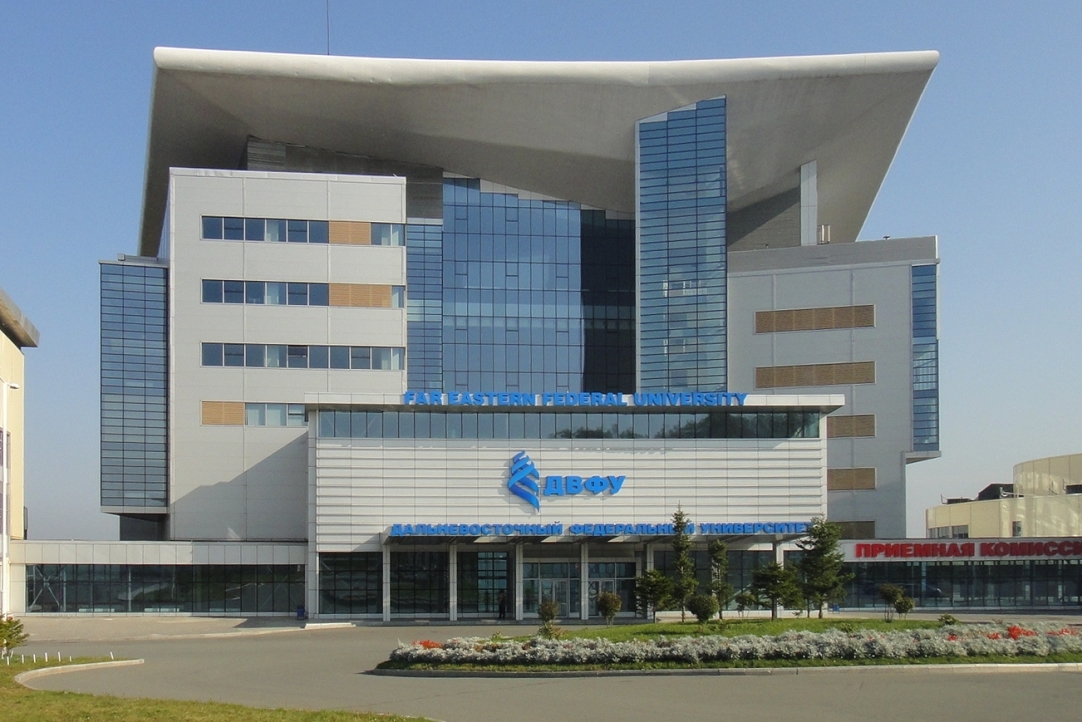
FEFU is known for being a modern, national-level university with a big campus that hosts (among other things) the Eastern Economic Forum. Our Far Eastern colleagues are interested in HSE University’s participation in the development of their educational and academic programmes, and despite the distance, they regularly come to Moscow and we visit FEFU. We are particularly interested in the experience of the Laboratory of Mathematical Modelling of Socio-Economic Processes in terms of organising field studies.
The main goal of our joint work is to develop models of the interactions between economic agents in different Russian regions, taking into account the heterogeneity of behavioural decision-making aspects detected by experimental economics methods. We can use these to explain various economic phenomena (such as economic and political institutions that appear in different regions). On the basis of our research results, we elaborate more effective economic mechanisms that take into account real people’s behaviour patterns, which cannot always be explained by neoclassical economics.
Kamchatka is a region of particular interest for us
Despite the huge distance, it is quite reachable from central Russia—thanks to state subsidies, flights are comparatively cheap. The Kamchatka region has nature reserves with tourist appeal, but tourism is still underdeveloped. There are certain limitations set by the administrations of nature zones: if the number of tourists grows considerably, Kamchatka’s reserves won’t be able to welcome everyone. But the region is interested in tourist inflow, even though it can’t be unlimited.
This presents an interesting economics problem. There is a good for which there is effective demand (tourism in Kamchatka), but the volume of this demand is underestimated by nature reserves and travel companies. There is an opportunity to meet this demand, but potential tourists are unaware of this, since they don’t know flights are affordable. Due to the misunderstanding between the stakeholders, new routes are not developed, which means that the territories are not used in the optimal way.
An economics mechanism is needed to change the situation and consider the interests of nature reserve administrators, travel companies, and tourists. This mechanism can be developed by experiments, among other means.
Another area of mutual research interest for us and our Far Eastern peers is the extent to which people in different Russian regions are willing to tolerate inconveniences and limitations for the sake of a certain public good that’s useful to everyone, including those who sacrificed nothing for it to appear.
This topic includes restrictions introduced due to the COVID-19 pandemic, the issue of vaccination (individuals who get vaccinated contribute to collective immunity), as well as more general themes related to self-sacrifice in the name of patriotism, participation in community service, volunteering etc. As part of experiments in different cities, it is possible to measure people’s preferences related to such situations and behaviours and their readiness to take social action, which might incur certain costs to them personally.
One of our mirror laboratory’s tasks is to create a laboratory base at the FEFU School of Economics and Management to carry out a series of experiments and study the values of experiment participants, levels of trust, preparedness to engage in competition and cooperation, depth of self-reflection, learning speed etc. We have developed learning aids, a package of apps for online simulators in microeconomics, as well as a set of experimental games dedicated, for example, to attitudes to risk, trust, measuring disposition toward corruption at customs, etc.
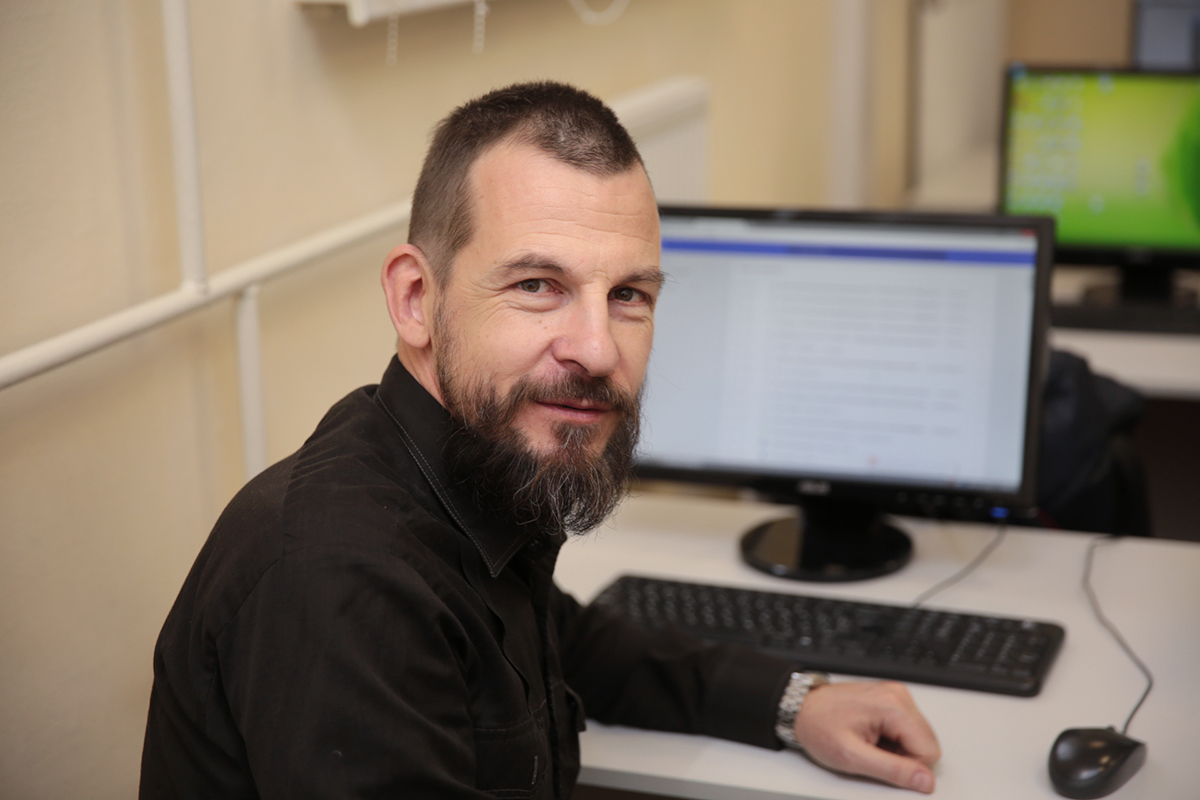
Eighteen desktop computers were purchased and a classroom was allocated at FEFU. As a result, we have a real laboratory successfully working under our academic supervision. We have also purchased equipment for a mobile lab, but it has not been installed yet due to COVID restrictions.
Both laboratories are equipped for economic experiments in which invited respondents sit at desktops or tablets and play economic games. The fixed-site laboratory is mostly aimed at student participants, while the mobile one is for wider audiences. The laboratory bus is equipped with a server, desktops etc, and can go, for example, to workers’ settlements to conduct studies with the residents.
There are many examples of such experiments all over the world, and hopefully, we will be able to conduct them this year too. Potential topics include people’s interactions with each other, trust, distribution of a resource. For example, in the Far East, the topic of how to distribute catches of fish, crab or shrimp among fishery participants may be relevant. There is an interesting assumption that we want to investigate: that people who live farther from capital cities and closer to nature are more inclined to cooperate with each other, with levels of injustice being much lower in their communities.
Another task of the mirror laboratory is to train professionals in experimental and behavioural economics who can carry out world-class research.
The First Pacific School of Experimental Economics took place as part of the ‘Mirror Laboratories’ project at FEFU in September 2021. A large delegation from the International Laboratory for Experimental and Behavioural Economics took part on behalf of HSE University. The participants attended lectures on models and methods of experimental economics, behavioural aspects of social interaction, game theory, and economic mechanisms. They presented and discussed their own ideas for experiments, learned about methods and design of online and on-site experimentation, as well as the experience of conducting interregional and international experimental studies.
We, in turn, have welcomed our Far Eastern colleagues to Moscow numerous times. Of course, the collaboration is hampered by the distance and the time difference, but these factors can be overcome. Our upcoming plans include another summer school and an international conference. This year, we also expect the first publications as a result of joint research on institutions and preferences in economic behaviour.
I believe that the collaboration between the HSE International Laboratory for Experimental and Behavioural Economics and the FEFU Laboratory of Mathematical Modelling of Socio-Economic Processes is a good illustration of how productive inter-university cooperation can be.
The third ‘Mirror Laboratories’ open project competition welcomes applications from HSE University research departments that are planning joint academic research with research departments of Russian higher education institutions, research institutions, and public research centres of the Russian Federation. More information and the application form are available here (in Russian).
See also:

HSE and UTM Present Results of Mirror Laboratory's Work at Russian–Malaysian Commission
HSE University–St Petersburg and the Universiti Teknologi Malaysia (UTM) presented the results of two years of work and a development roadmap for the mirror laboratory on social entrepreneurship. The document outlines the strategy for global transformation in the business and digital innovation sphere.
'We View Mathematics as a Universal Language for Natural Sciences, Economics, and Computer Science'
The Laboratory for Geometric Algebra and Applications at the HSE Faculty of Economic Sciences is developing a universal language for mathematics, physics, and other exact and natural sciences. It is creating computational methods that are applied in geometry, physics, machine learning, engineering, computer science, and other fields. The laboratory’s staff, including doctoral students, have published numerous articles in leading scientific journals and have taken part in major international conferences. Dmitry Shirokov, Head of the Laboratory, spoke with the HSE News Service about their work.
HSE Researchers Introduce Novel Symmetry-Aware Neural Network Architecture
Researchers at the HSE Laboratory for Geometric Algebra and Applications have developed a new neural network architecture that can accelerate and streamline data analysis in physics, biology, and engineering. The scientists presented their solution on July 16 in Vancouver at ICML 2025, one of the world's leading conferences on machine learning. Both the paper and the source code are publicly available.
'Biotech Is Booming Worldwide'
For more than five years, the International Laboratory of Bioinformatics at the HSE Faculty of Computer Science has been advancing cutting-edge research. During this time, its scientists have achieved major breakthroughs, including the development of CARDIOLIFE—a unique genetic test unmatched worldwide that predicts the likelihood of cardiovascular disease. With the active participation of HSE students, including doctoral students, the team is also working on a new generation of medicines. In this interview with the HSE News Service, Laboratory Head Maria Poptsova shares insights into their work.
'Samarkand—St Petersburg': HSE University–St Petersburg and Samarkand State University to Design Digital Future of Cultural Heritage
Samarkand State University named after Sharof Rashidov hosted the international research and educational seminar 'Branding Cultural Heritage: Digital Tools and Design Practices.' The event gathered researchers and students from Russia and Uzbekistan—participants of a large-scale project of the mirror laboratory 'Integrated Platform Solutions for the Preservation and Promotion of Cultural Heritage (Cases of Samarkand and St Petersburg)'.
'Our Goal Is Not to Determine Which Version Is Correct but to Explore the Variability'
The International Linguistic Convergence Laboratory at the HSE Faculty of Humanities studies the processes of convergence among languages spoken in regions with mixed, multiethnic populations. Research conducted by linguists at HSE University contributes to understanding the history of language development and explores how languages are perceived and used in multilingual environments. George Moroz, head of the laboratory, shares more details in an interview with the HSE News Service.
AI to Enable Accurate Modelling of Data Storage System Performance
Researchers at the HSE Faculty of Computer Science have developed a new approach to modelling data storage systems based on generative machine learning models. This approach makes it possible to accurately predict the key performance characteristics of such systems under various conditions. Results have been published in the IEEE Access journal.
‘It’s Thrilling to Have an Opportunity to Discuss Your Scientific Ideas with Interested People’
The International Laboratory of Dynamical Systems and Applications at HSE University–Nizhny Novgorod conducts in-depth theoretical and applied research, including the study of ocean waves, solar corona reconnections, volcanic phenomena, and ship stability. The lab’s researchers, who have received more than 20 significant research grants over the past five years, actively cooperate with Russian and international colleagues from China, Spain, the USA, the UK, Brazil, and other countries. Prof. Olga Pochinka spoke to the HSE News Service about the laboratory’s work.
HSE University–St Petersburg Presents Project on Social Entrepreneurship at Session of Russian–Malaysian Working Group
Alexander Sorokin, Dean of the St Petersburg School of Social Sciences, presented the results of a joint Russian–Malaysian mirror laboratory project in social entrepreneurship at the second meeting of the Russian–Malaysian Working Group on Education, Science, and Technology at the Universiti Teknologi Malaysia (UTM).
'The Branch of Medicine That Our Developments Primarily Target Is Cardiology'
The application of mathematical models to the diagnosis and treatment of cardiovascular diseases contributes to the effective detection of patient predispositions and supports the selection of best treatment strategies. The use of mathematical models helps create new diagnostic tools and train neural networks to assist clinicians. Researchers from HSE University and colleagues from Saratov State Medical University are engaged in this work as part of the Mirror Laboratories project. In this interview, Natalya Stankevich, Senior Research Fellow at the International Laboratory of Dynamical Systems and Applications of the HSE Campus in Nizhny Novgorod, talks about what the collaboration has achieved so far.