

Joint Project of Scientists from HSE University and Surgut State University to Help Prevent Recurrent Heart Attacks and Strokes
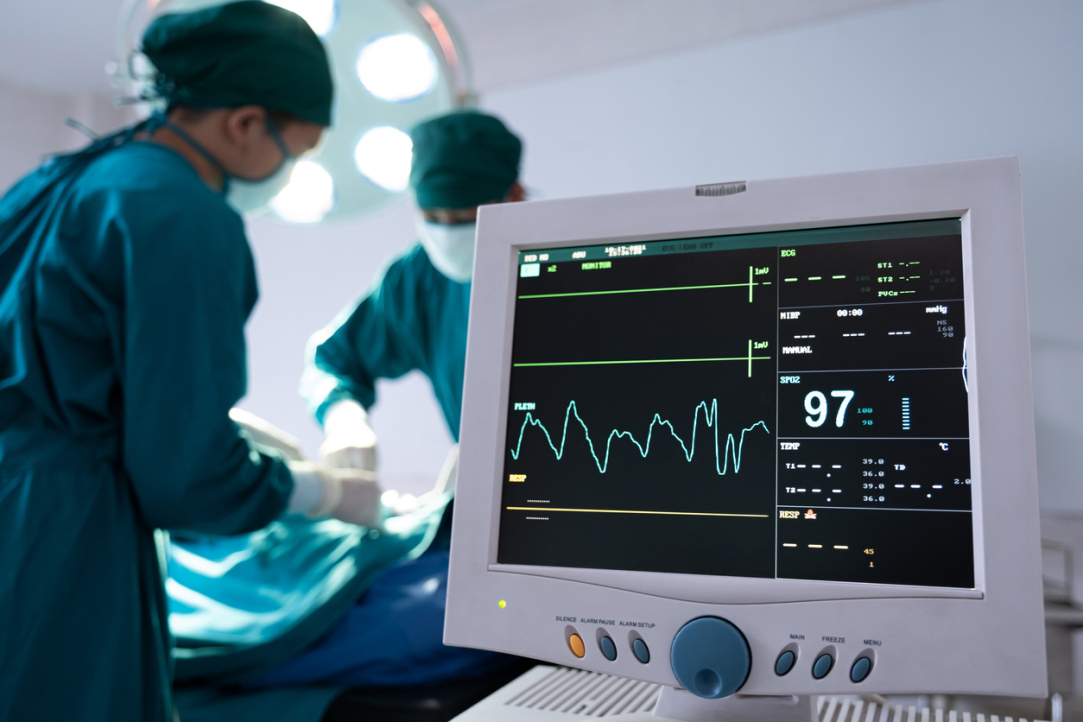
One of the winning projects of a competition held by HSE University’s Mirror Laboratories last June focuses on the use of machine learning technologies to predict the outcomes of acute coronary syndrome. It is implemented by HSE University’s International Laboratory of Bioinformatics together with the Research and Educational Centre of the Medical Institute at Surgut State University. Maria Poptsova, Head of the International Laboratory of Bioinformatics and Associate Professor at HSE University’s Faculty of Computer Science, talks about how this joint project originated, how it will help patients, and how work to implement it will be organised.

— Dr Poptsova, how did the idea of cooperating with your Surgut colleagues come about? Why was the decision made to implement this project with them?
— We started communicating with colleagues from Surgut within the framework of the consortium on cardiogenetics (which brings together the efforts of Russian research groups and institutes to study the genetics of cardiovascular diseases).
Director of the Medical Institute at Surgut State University Lyudmila Kovalenko spends a lot of effort and energy on the development of scientific and technological projects in her region. Thus, we saw the launch of the ‘Code of Life’ project, which includes both genetic testing to determine gene variants responsible for the development of cardiovascular diseases, and continuous patient support using telemedicine technologies.
We learnt that the Surgut District Cardiac Centre (officially called the District Cardiology Dispensary Centre for Diagnostics and Cardiovascular Surgery) has ‘Patient’, a medical information system (MIS) that records patient histories. In particular, they currently have information about ten thousand people admitted to the district cardio centre with myocardial infarction. As it turned out, in Yugra, the mortality rate from cardiovascular diseases is three times lower than in other regions of Russia. And then we decided that we could use this unique data to train predictive artificial intelligence systems.
— What is the aim of this work? How can machine learning technologies help predict the outcomes of acute coronary syndrome?
— The essence of our project is to extract all the data on ten thousand patients who have been admitted to the district cardiac centre with myocardial infarction since 2009 and about whom there are records in the ‘Patient’ MIS. Their medical histories are known: we know who suffered a second stroke or heart attack, who is unfortunately no longer alive, and who is still alive.
Based on this data, a machine learning model can be built that will predict the risk of an adverse event occurring after such patients are discharged from the hospital. And with the help of the prognostic model developed, it will be possible to identify patients at high risk of recurrent heart attack or stroke, or even death. Such patients need to be monitored more strictly, including through telemedicine, and their lives should be extended.

— How will joint work be organised? Who will be involved in it?
— On the part of Surgut State University, the project was headed by Anton Vorobyov, Associate Professor at the Department of Cardiology and leading researcher at the Research Centre of the Medical Institute. Dr Vorobyov will carry out the clinical interpretation of the data and select the factors that make the most significant contribution to the model.
One should understand that there is no standard for entering patient data from 2009 to the present day. The data is very heterogeneous. We will have to develop some algorithms for automatic parsing of unstructured texts, and test the use of NLP methods in order to bring the patient database into a form that can be fed to machine learning algorithms.
In addition to building the most accurate model, it will be necessary to determine the factors that contribute most to the model’s predictive power. A pilot project on 500 patients showed that such factors can be clinical, biochemical (biomarkers), and social indicators. This will require joint work between doctors and data scientists to understand which factors can be included in the model and which are side artefacts and do not provide meaningful information for the attending physician.
On behalf of HSE University, students of the Master’s programme in Data Analysis in Biology and Medicine, as well as graduate students, participate in the project; on the part of SurSU, students and residents of the Medical Institute take part.
— What results are expected? When do you plan to present them?
— By the end of 2025—that is, by the end of the project—we plan to have a working program based on a machine learning model trained on ten thousand patients.
In the waiting room, the doctor will be able to enter the values of the clinical and biochemical data of the patient examination, which is routinely performed in the hospital upon admission of a patient with myocardial infarction, and obtain the classification of this patient. That is, the doctor will immediately see whether the patient’s risk of developing a recurrent adverse event (heart attack, stroke) or death is high or low.
It is planned to test the model on new patients who are delivered to the cardiac centre with myocardial infarction. And in the future, when data from genotyping appears, we plan to build predictive artificial intelligence models taking into account cardiogenetics data.
— Will it be possible to use this system not only in the Khanty-Mansi Autonomous Okrug—Yugra, but also in other regions?
— Yes. The artificial intelligence system we have developed is scalable. It will be interesting to test it on data from patients at other cardiac centres.
See also:

HSE and UTM Present Results of Mirror Laboratory's Work at Russian–Malaysian Commission
HSE University–St Petersburg and the Universiti Teknologi Malaysia (UTM) presented the results of two years of work and a development roadmap for the mirror laboratory on social entrepreneurship. The document outlines the strategy for global transformation in the business and digital innovation sphere.
'We View Mathematics as a Universal Language for Natural Sciences, Economics, and Computer Science'
The Laboratory for Geometric Algebra and Applications at the HSE Faculty of Economic Sciences is developing a universal language for mathematics, physics, and other exact and natural sciences. It is creating computational methods that are applied in geometry, physics, machine learning, engineering, computer science, and other fields. The laboratory’s staff, including doctoral students, have published numerous articles in leading scientific journals and have taken part in major international conferences. Dmitry Shirokov, Head of the Laboratory, spoke with the HSE News Service about their work.
HSE Scientists Optimise Training of Generative Flow Networks
Researchers at the HSE Faculty of Computer Science have optimised the training method for generative flow neural networks to handle unstructured tasks, which could make the search for new drugs more efficient. The results of their work were presented at ICLR 2025, one of the world’s leading conferences on machine learning. The paper is available at Arxiv.org.
Quantity over Quality: How Publication Activity Leads to Crisis
Participants of the 4th Fall into ML conference at HSE University held a discussion titled ‘Academia in Crisis: What Does the Future Hold?’ In particular, they examined why the number of scientific publications continues to grow, what the quality of these papers is, what expectations should be placed on researchers, and what role artificial intelligence plays in preparing academic articles.
Start of a Long Journey: Young HSE Scientists Contribute to Learning Theory at COLT 2025
Participation in high-level international events is crucial for the professional development of researchers starting their career in science. It provides an opportunity to exchange ideas, create promising teams, and make important connections. This summer, Denis Ryapolov and Askar Tsyganov, students of the Applied Mathematics and Computer Science programme and staff of the AI and Digital Sciences Institute at the Faculty of Computer Science of HSE University, attended the prestigious international Conference on Learning Theory, COLT 2025, which was held in Lyon, France. In an interview, they shared their experiences and impressions from the trip.
HSE Researchers Introduce Novel Symmetry-Aware Neural Network Architecture
Researchers at the HSE Laboratory for Geometric Algebra and Applications have developed a new neural network architecture that can accelerate and streamline data analysis in physics, biology, and engineering. The scientists presented their solution on July 16 in Vancouver at ICML 2025, one of the world's leading conferences on machine learning. Both the paper and the source code are publicly available.
'Biotech Is Booming Worldwide'
For more than five years, the International Laboratory of Bioinformatics at the HSE Faculty of Computer Science has been advancing cutting-edge research. During this time, its scientists have achieved major breakthroughs, including the development of CARDIOLIFE—a unique genetic test unmatched worldwide that predicts the likelihood of cardiovascular disease. With the active participation of HSE students, including doctoral students, the team is also working on a new generation of medicines. In this interview with the HSE News Service, Laboratory Head Maria Poptsova shares insights into their work.
'Samarkand—St Petersburg': HSE University–St Petersburg and Samarkand State University to Design Digital Future of Cultural Heritage
Samarkand State University named after Sharof Rashidov hosted the international research and educational seminar 'Branding Cultural Heritage: Digital Tools and Design Practices.' The event gathered researchers and students from Russia and Uzbekistan—participants of a large-scale project of the mirror laboratory 'Integrated Platform Solutions for the Preservation and Promotion of Cultural Heritage (Cases of Samarkand and St Petersburg)'.
'Our Goal Is Not to Determine Which Version Is Correct but to Explore the Variability'
The International Linguistic Convergence Laboratory at the HSE Faculty of Humanities studies the processes of convergence among languages spoken in regions with mixed, multiethnic populations. Research conducted by linguists at HSE University contributes to understanding the history of language development and explores how languages are perceived and used in multilingual environments. George Moroz, head of the laboratory, shares more details in an interview with the HSE News Service.
AI to Enable Accurate Modelling of Data Storage System Performance
Researchers at the HSE Faculty of Computer Science have developed a new approach to modelling data storage systems based on generative machine learning models. This approach makes it possible to accurately predict the key performance characteristics of such systems under various conditions. Results have been published in the IEEE Access journal.