

Operation of Cellular Networks Found Similar to Bacteria Growth in Petri Dish

Scientists at HSE University have discovered an approach to analysing mobile communication quality by applying the principles of surface physics
Scientists at the HSE Laboratory for Computational Physics have developed a new model for analysing communication networks that can significantly enhance the speed of mobile communications. To achieve this, the researchers used computational physics methods and phase transition models. It turns out that the functioning of cellular networks is in many ways similar to the growth of surfaces in physics. The study was performed using the HPC cHARISMa cluster at HSE University. The study findings have been published in Frontiers in Physics.
Mobile networks enable making calls, sending messages, and using the internet. However, for these networks to function smoothly, it is essential to be able to simulate their operation. Simulations help predict how a network will behave in various situations, including extreme conditions, and identify areas for improvement.
One of the key tools for studying mobile networks is parallel discrete-event simulation (PDES). This method is based on splitting a system into numerous subsystems to enable parallel modelling of various processes. Each of these subsystems has its own local virtual time, which does not align with the actual time. When the local times significantly diverge from each other, leading to process desynchronisation, the network may experience slower operation or errors. Lev Shchur and Liliia Zhukova, scientists at HSE MIEM, studied the evolution of local virtual time profiles in a cellular communication model and discovered similarities with the surface growth processes in physics.

Associate Professor, School of Applied Mathematics, HSE Tikhonov Moscow Institute of Electronics and Mathematics
After conducting a thorough analysis of the processes, we observed similarities between changes in local time in cellular communication modelling and alterations in a surface profile as it grows, eg through spray application, as the time only progresses forward. Surface physics is a well-established field with equations that facilitate analysis and modelling of various processes. We have transferred knowledge from this domain to computing technologies and constructed a model simulating the evolution of local virtual time profiles.
By comparing their findings with a model of a real mobile network, the scientists have found that the proposed method enables accurate prediction of critical moments when the network's performance may deteriorate, so that issues can be addressed proactively, leading to improved network operation.
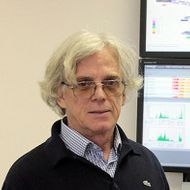
Head, Laboratory for Computational Physics, HSE Tikhonov Moscow Institute of Electronics and Mathematics
With the help of computational physics algorithms, it becomes possible to determine the moment when local time ceases to progress, referred to in physics as the phase transition point. We can describe the events occurring around it and anticipate potential communication disruptions or alterations in load distribution at a cellular communication station. With this model, we can provide the industry with better tools for planning, constructing, and operating mobile networks.
The researchers emphasise that understanding the mechanics of parallel computing in actual high-load networks will facilitate faster and more efficient simulation of mobile networks and other systems employing similar calculations across various domains such as engineering, computer science, economics, and transportation.
See also:

Scientists Rank Russian Regions by Climate Risk Levels
Researchers from HSE University and the Russian Academy of Sciences have assessed the levels of climate risks across Russian regions. Using five key climate risks—heatwaves, water stress, wildfires, extreme precipitation, and permafrost degradation—the scientists ranked the country’s regions according to their need for adaptation to climate change. Krasnoyarsk Krai, Irkutsk Region, and Sverdlovsk Region rank among the highest for four of the five climate risks considered. The study has been published in Science of the Total Environment.
HSE Researchers Teach Neural Network to Distinguish Origins from Genetically Similar Populations
Researchers from the AI and Digital Science Institute, HSE Faculty of Computer Science, have proposed a new approach based on advanced machine learning techniques to determine a person’s genetic origin with high accuracy. This method uses graph neural networks, which make it possible to distinguish even very closely related populations.
HSE Economists Reveal the Secret to Strong Families
Researchers from the HSE Faculty of Economic Sciences have examined the key factors behind lasting marriages. The findings show that having children is the primary factor contributing to marital stability, while for couples without children, a greater income gap between spouses is associated with a stronger union. This is the conclusion reported in Applied Econometrics.
Fifteen Minutes on Foot: How Post-Soviet Cities Manage Access to Essential Services
Researchers from HSE University and the Institute of Geography of the Russian Academy of Sciences analysed three major Russian cities to assess their alignment with the '15-minute city' concept—an urban design that ensures residents can easily access essential services and facilities within walking distance. Naberezhnye Chelny, where most residents live in Soviet-era microdistricts, demonstrated the highest levels of accessibility. In Krasnodar, fewer than half of residents can easily reach essential facilities on foot, and in Saratov, just over a third can. The article has been published in Regional Research of Russia.
HSE Researchers Find Counter-Strike Skins Outperform Bitcoin and Gold as Alternative Investments
Virtual knives, custom-painted machine guns, and gloves are common collectible items in videogames. A new study by scientists from HSE University suggests that digital skins from the popular video game Counter-Strike: Global Offensive (CS:GO) rank among the most profitable types of alternative investments, with average annual returns exceeding 40%. The study has been published in the Social Science Research Network (SSRN), a free-access online repository.
HSE Neurolinguists Reveal What Makes Apps Effective for Aphasia Rehabilitation
Scientists at the HSE Centre for Language and Brain have identified key factors that increase the effectiveness of mobile and computer-based applications for aphasia rehabilitation. These key factors include automated feedback, a variety of tasks within the application, extended treatment duration, and ongoing interaction between the user and the clinician. The article has been published in NeuroRehabilitation.
'Our Goal Is Not to Determine Which Version Is Correct but to Explore the Variability'
The International Linguistic Convergence Laboratory at the HSE Faculty of Humanities studies the processes of convergence among languages spoken in regions with mixed, multiethnic populations. Research conducted by linguists at HSE University contributes to understanding the history of language development and explores how languages are perceived and used in multilingual environments. George Moroz, head of the laboratory, shares more details in an interview with the HSE News Service.
Slim vs Fat: Overweight Russians Earn Less
Overweight Russians tend to earn significantly less than their slimmer counterparts, with a 10% increase in body mass index (BMI) associated with a 9% decrease in wages. These are the findings made by Anastasiia Deeva, lecturer at the HSE Faculty of Economic Sciences and intern researcher in Laboratory of Economic Research in Public Sector. The article has been published in Voprosy Statistiki.
Scientists Reveal Cognitive Mechanisms Involved in Bipolar Disorder
An international team of researchers including scientists from HSE University has experimentally demonstrated that individuals with bipolar disorder tend to perceive the world as more volatile than it actually is, which often leads them to make irrational decisions. The scientists suggest that their findings could lead to the development of more accurate methods for diagnosing and treating bipolar disorder in the future. The article has been published in Translational Psychiatry.
Scientists Develop AI Tool for Designing Novel Materials
An international team of scientists, including researchers from HSE University, has developed a new generative model called the Wyckoff Transformer (WyFormer) for creating symmetrical crystal structures. The neural network will make it possible to design materials with specified properties for use in semiconductors, solar panels, medical devices, and other high-tech applications. The scientists will present their work at ICML, a leading international conference on machine learning, on July 15 in Vancouver. A preprint of the paper is available on arxiv.org, with the code and data released under an open-source license.