

Healthy Nutrition Saves Public Funds: Strategies to Reduce Healthcare Costs in Russia
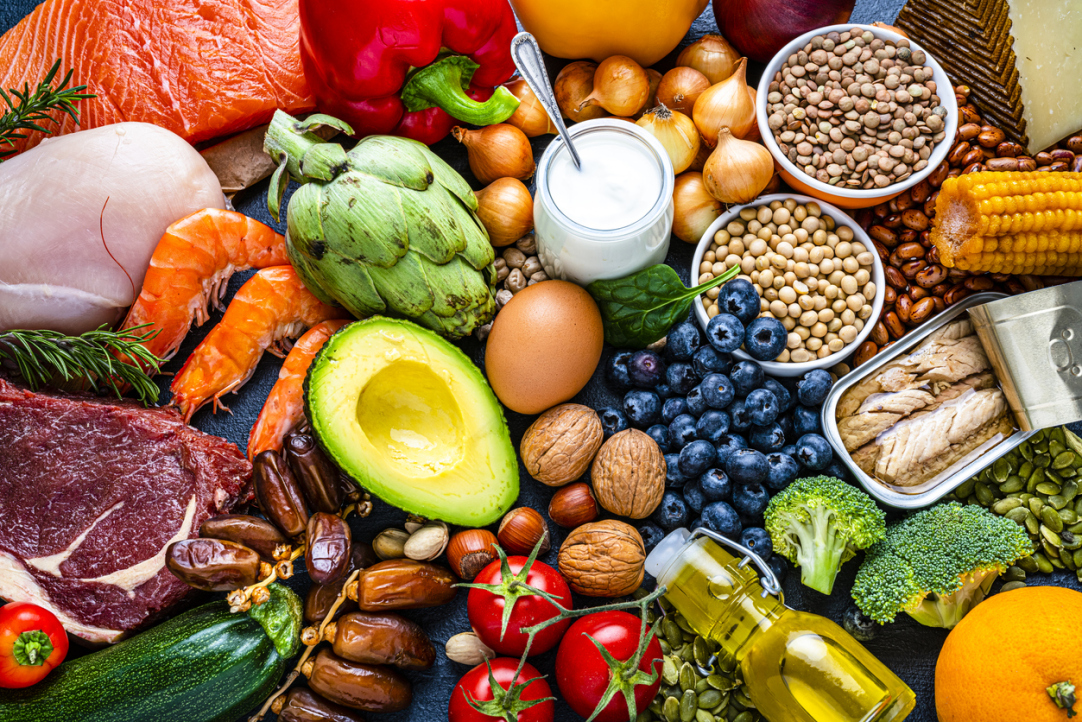
In Russia, the annual cost of treating type 2 diabetes alone exceeds 500 billion roubles. Promoting healthy nutrition programmes can ease the burden on the healthcare system and increase life expectancy. This was the conclusion reached by economists at HSE University after analysing global experiences with government involvement in promoting a healthy lifestyle.
An unbalanced diet and nutritional disorders, whether due to malnutrition or overeating, cause harm to health and increase the burden on the healthcare system and social costs. According to the World Bank, low- and middle-income countries collectively lose up to $100 billion annually in medical costs and reduced productivity due to diseases linked to the consumption of substandard and unhealthy food. Similar issues are observed in Russia: a 2016 study found that the cost of treating type 2 diabetes alone, which develops in 70% of cases due to overeating and an imbalanced diet, amounts to nearly 1% of the annual GDP.
Assistant Professor at the HSE Faculty of Economic Sciences Natalia Khorkina, in collaboration with Research Fellow at the Laboratory of Public Sector Economic Research, HSE Centre for Basic Research, Kristina Chetaeva and bachelor's student at the HSE Faculty of Economic Sciences Alexandra Shpeko, analysed best practices of other countries in promoting healthy nutrition programmes and used the findings to develop recommendations for Russia.
There are three primary methods for increasing the popularity of healthy food consumption: educational initiatives, economic measures, and administrative regulation. Each of the methods can be applied both at the central and regional levels. According to the authors, the most effective approach is a combination of higher taxes on harmful products along with subsidies for both producers and consumers of healthy food. In Western European countries, the introduction of an excise tax of 10% to 20% on sugary carbonated drinks has led to a 12% to 15% reduction in their consumption, resulting in a $17 billion decrease in healthcare costs. In Mexico, implementing such a tax has resulted in savings of $4 for every dollar spent on administering the programme. In 2023, Russia introduced an excise tax on sugary drinks, leading to a twofold reduction in sugar content in many of these beverages.
Subsidising producers of healthy foods and encouraging the availability of nutritious options in the market can also be effective strategies. For example, Singapore has implemented a competitive support system for manufacturers. The country invested $35 million in the programme, distributing this amount among 100 companies. Subsequently, their products were featured in over 10,000 food and retail establishments. In 2022 alone, this initiative led to the preparation of over 200 million servings of food containing healthy ingredients. Additionally, providing support to specific population groups can be beneficial, such as subsidising hot lunches in schools and offering free meals to students from large families, orphans, and other vulnerable groups. Administrative measures can also produce positive outcomes. For example, in Gateshead, England, local authorities have prohibited the establishment of fast-food outlets near schools and in areas with high rates of childhood obesity. As a result, the proportion of public catering establishments offering junk food in the town decreased by 14% over four years. In Los Angeles, measures to ban new fast-food outlets resulted in a 3% reduction in obesity rates and a 2% decrease in diabetes rates within seven years of the ban. Many Latin American countries have implemented food labelling that highlights high calorie content and the associated health risks of consuming these products. In Chile, up to 50% of the population altered their eating habits following the introduction of such labelling, while in Uruguay, the consumption of sugary carbonated drinks dropped by 24%.

Kristina Chetaeva
Such nudging measures have proven highly effective and could be implemented in Russia as well. According to the authors, one effective method could be the ‘traffic light’ labelling system. It uses color-coded labels to inform customers about the nutritional content and health impact of products: red for harmful, green for beneficial, and yellow for products with mixed properties. 'This is an effective and intuitive method for helping people make informed decisions about the food they buy, which is especially crucial for young people whose eating habits are still developing. For example, studies conducted in Ecuador have shown that this labelling system can encourage children and adolescents to choose healthier foods. Scientists in Japan observed a significantly healthier selection of dishes by students after implementing traffic light-style labels on the dinner menu. In Russia, the traffic light labelling is still optional and not very common,' comments Kristina Chetaeva, Research Fellow at the Laboratory of Public Sector Economic Research, HSE Centre for Basic Research.

Natalia Khorkina
Many of these measures are already in place in Russia. For example, a reduced VAT rate of 10% is applied to healthy foods such as meat, dairy products, vegetables, and berries, while the VAT rate for fast food has been increased to 20%. In 2024, up to 8 billion roubles will be allocated for subsidies to farms. Nevertheless, the researchers recommend maintaining and expanding policies that promote healthy eating. 'Subsidies for sellers of healthy foods, additional funding for school hot lunches, and benefits for employers who offer balanced diets to their employees could serve as key tools for promoting healthy eating in Russia. Additionally, it is important to continue differentiating indirect taxes on specific food groups, following the model of the excise tax on sugary carbonated drinks introduced in 2023, and to make the product labelling system more accessible and understandable. Such a policy could lead to a significant reduction in the burden on the healthcare system,' according to Natalia Khorkina, Assistant Professor at the HSE Faculty of Economic Sciences.
See also:

Scientists Test Asymmetry Between Matter and Antimatter
An international team, including scientists from HSE University, has collected and analysed data from dozens of experiments on charm mixing—the process in which an unstable charm meson oscillates between its particle and antiparticle states. These oscillations were observed only four times per thousand decays, fully consistent with the predictions of the Standard Model. This indicates that no signs of new physics have yet been detected in these processes, and if unknown particles do exist, they are likely too heavy to be observed with current equipment. The paper has been published in Physical Review D.
HSE Scientists Reveal What Drives Public Trust in Science
Researchers at HSE ISSEK have analysed the level of trust in scientific knowledge in Russian society and the factors shaping attitudes and perceptions. It was found that trust in science depends more on everyday experience, social expectations, and the perceived promises of science than on objective knowledge. The article has been published in Universe of Russia.
Scientists Uncover Why Consumers Are Reluctant to Pay for Sugar-Free Products
Researchers at the HSE Institute for Cognitive Neuroscience have investigated how 'sugar-free' labelling affects consumers’ willingness to pay for such products. It was found that the label has little impact on the products’ appeal due to a trade-off between sweetness and healthiness: on the one hand, the label can deter consumers by implying an inferior taste, while on the other, it signals potential health benefits. The study findings have been published in Frontiers in Nutrition.
HSE Psycholinguists Launch Digital Tool to Spot Dyslexia in Children
Specialists from HSE University's Centre for Language and Brain have introduced LexiMetr, a new digital tool for diagnosing dyslexia in primary school students. This is the first standardised application in Russia that enables fast and reliable assessment of children’s reading skills to identify dyslexia or the risk of developing it. The application is available on the RuStore platform and runs on Android tablets.
Physicists Propose New Mechanism to Enhance Superconductivity with 'Quantum Glue'
A team of researchers, including scientists from HSE MIEM, has demonstrated that defects in a material can enhance, rather than hinder, superconductivity. This occurs through interaction between defective and cleaner regions, which creates a 'quantum glue'—a uniform component that binds distinct superconducting regions into a single network. Calculations confirm that this mechanism could aid in developing superconductors that operate at higher temperatures. The study has been published in Communications Physics.
Neural Network Trained to Predict Crises in Russian Stock Market
Economists from HSE University have developed a neural network model that can predict the onset of a short-term stock market crisis with over 83% accuracy, one day in advance. The model performs well even on complex, imbalanced data and incorporates not only economic indicators but also investor sentiment. The paper by Tamara Teplova, Maksim Fayzulin, and Aleksei Kurkin from the Centre for Financial Research and Data Analytics at the HSE Faculty of Economic Sciences has been published in Socio-Economic Planning Sciences.
Larger Groups of Students Use AI More Effectively in Learning
Researchers at the Institute of Education and the Faculty of Economic Sciences at HSE University have studied what factors determine the success of student group projects when they are completed with the help of artificial intelligence (AI). Their findings suggest that, in addition to the knowledge level of the team members, the size of the group also plays a significant role—the larger it is, the more efficient the process becomes. The study was published in Innovations in Education and Teaching International.
New Models for Studying Diseases: From Petri Dishes to Organs-on-a-Chip
Biologists from HSE University, in collaboration with researchers from the Kulakov National Medical Research Centre for Obstetrics, Gynecology, and Perinatology, have used advanced microfluidic technologies to study preeclampsia—one of the most dangerous pregnancy complications, posing serious risks to the life and health of both mother and child. In a paper published in BioChip Journal, the researchers review modern cellular models—including advanced placenta-on-a-chip technologies—that offer deeper insights into the mechanisms of the disorder and support the development of effective treatments.
Using Two Cryptocurrencies Enhances Volatility Forecasting
Researchers from the HSE Faculty of Economic Sciences have found that Bitcoin price volatility can be effectively predicted using Ethereum, the second-most popular cryptocurrency. Incorporating Ethereum into a predictive model reduces the forecast error to 23%, outperforming neural networks and other complex algorithms. The article has been published in Applied Econometrics.
Administrative Staff Are Crucial to University Efficiency—But Only in Teaching-Oriented Institutions
An international team of researchers, including scholars from HSE University, has analysed how the number of non-academic staff affects a university’s performance. The study found that the outcome depends on the institution’s profile: in research universities, the share of administrative and support staff has no effect on efficiency, whereas in teaching-oriented universities, there is a positive correlation. The findings have been published in Applied Economics.