

‘HSE’s Industry Ties Are Invaluable’

Pan Zhengwu has spent the last seven years at HSE University—first as a student of the Bachelor’s in Software Engineering and now in the Master’s in System and Software Engineering at the Faculty of Computer Science. In addition to his busy academic schedule, he works as a mobile software engineer at Yandex and is an avid urban photographer. In his interview with the HSE News Service, Zhengwu talks about the challenges he faced when he first moved to Russia, shares his thoughts on ‘collaborating’ with AI, and reveals one of his top spots for taking photos in Moscow.
Educational Background
I moved from China to Russia at the age of 12 and completed my secondary education here. Moving to Russia at 12 posed early challenges, such as language barriers and cultural adjustment. Over time, immersion in school and daily life helped me master Russian and integrate into the community.
I chose HSE for its globally recognised Faculty of Computer Science, which combines rigorous academic training with cutting-edge research opportunities. Staying in Russia allowed me to build on my early adaptation to the culture and language while accessing HSE’s strong industry connections.
A Unique Academic Environment
HSE’s reputation as a leader in technology education, coupled with its focus on practical research, made it the ideal choice.
The System and Software Engineering programme stood out for its balance of theoretical depth and real-world applications, preparing students for both industry and academia
My programme is taught in both English and Russian (50/50), which reflects the bilingual academic environment here.
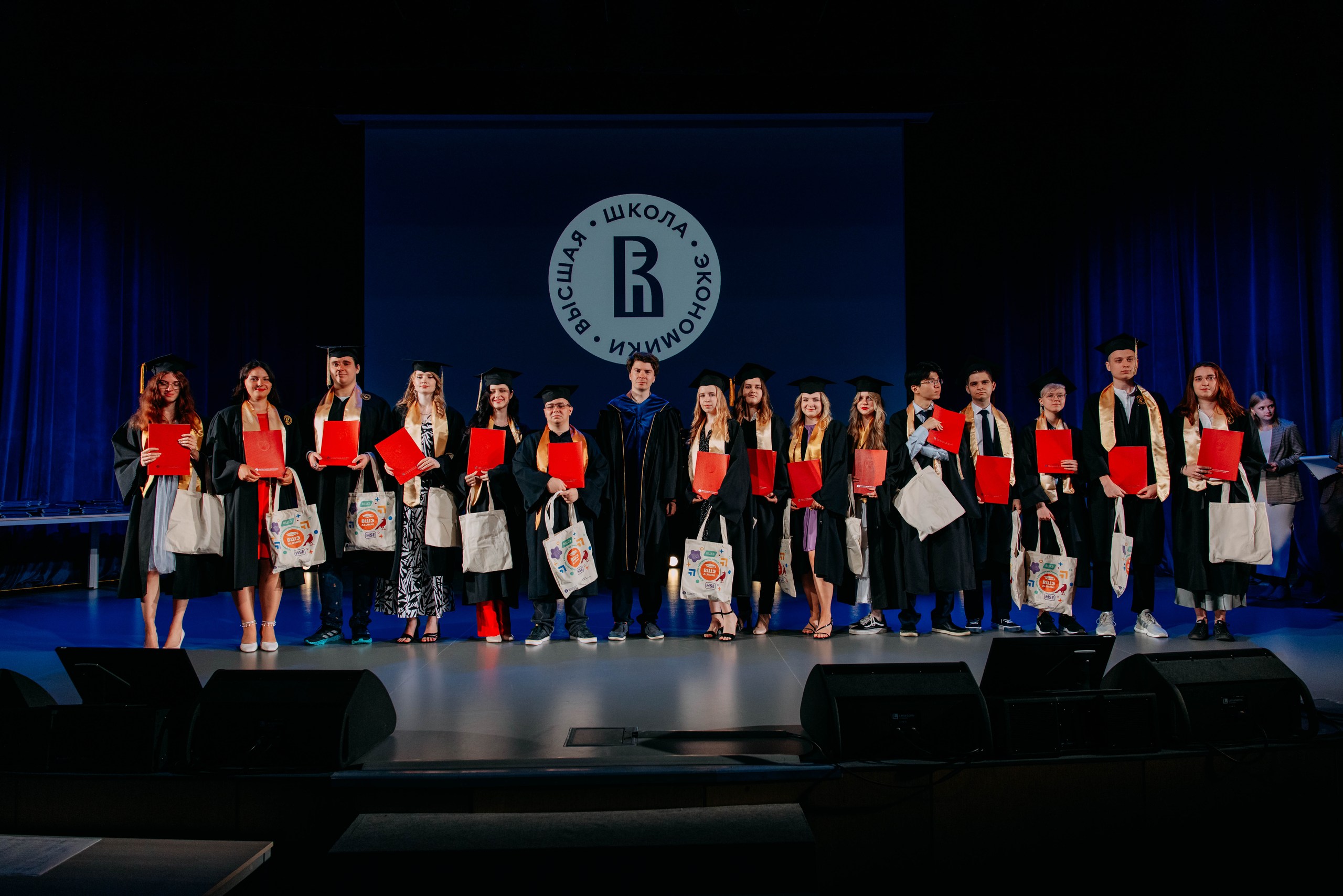
HSE encourages interdisciplinary collaboration and hands-on learning. For instance, my work at the Laboratory for Cloud and Mobile Technologies bridges academia and industry, allowing me to apply classroom knowledge to real-world projects.
Courses like ‘Advanced Software Design’ and my lab work have been pivotal. The lab’s focus on cloud technologies aligns with my passion for scalable software solutions, and my supervisors have mentored me in both technical and research skills.
Views on AI
As a mobile software engineer at Yandex, I engage with AI-driven tools daily, particularly in optimising mobile applications and backend systems to enhance performance and user experience. I see AI as a collaborator—it enhances efficiency, but human oversight remains crucial to ensuring ethical and practical applications. I believe AI should work alongside humans, augmenting our capabilities rather than replacing them.
As a programmer, I integrate AI into my daily workflow, automating repetitive tasks and optimising software performance.
In research, AI plays a vital role in expanding my ability to collect, analyse, and synthesise information, ultimately accelerating the research process and improving outcomes
Embracing AI's potential allows us to push the boundaries of innovation while maintaining responsible and informed usage.
Advice for International Students
Having lived in Russia since childhood, my transition to university life was smoother than most international students. However, balancing a bilingual programme required adaptability. HSE’s collaborative environment and resources like language support helped me thrive.
Embrace bilingualism—even basic Russian improves daily interactions. After over a decade here, I’m fluent in Russian. It’s essential for workplace collaboration, navigating bureaucracy, and building relationships.

Russians’ direct communication style initially surprised me, but I’ve grown to appreciate their honesty and warmth. Traditions like Maslenitsa (butter week) and communal tea breaks are highlights.
Seek out labs or internships early; HSE’s industry ties are invaluable for career growth. Balance academics with hands-on projects. Moscow’s tech scene offers endless learning opportunities—attend meetups, visit tech hubs, and network.
Networking and Growth
Working at Yandex and collaborating in HSE’s labs has expanded my professional network. Tech meetups and university events also connect me with peers and mentors. While I haven’t presented at conferences yet, my lab work involves collaborative projects with industry partners, simulating the rigor and innovation of academic forums.
Juggling work, research, and personal growth has taught me to adapt and thrive in dynamic environments
Daily Life
My day revolves around Yandex, classes, and lab work. At the weekend, I balance research and exploring the city.
Sometimes I go for photography walks or develop film. Film photography is my passion and creative outlet. I use vintage cameras to document Moscow’s architecture and daily life, the blend of old and new. It’s a relaxing contrast to my technical work.
My favourite places in Moscow are Zaryadye Park for its mix of futuristic architecture and history, the Artplay Design District (a hub for street art and creativity), and VDNKh, a tribute to Soviet-era innovation and the perfect place for photography.
Post-Graduation Plans
After graduation, I plan to stay in research, ideally within Russia or at an international institution that values innovation. HSE’s labs and partnerships provide a strong foundation for this goal. I aspire to continue my career at Yandex, as it is a highly innovative and forward-thinking company. Working there has provided me with invaluable experience in cutting-edge technologies, particularly in mobile software development.
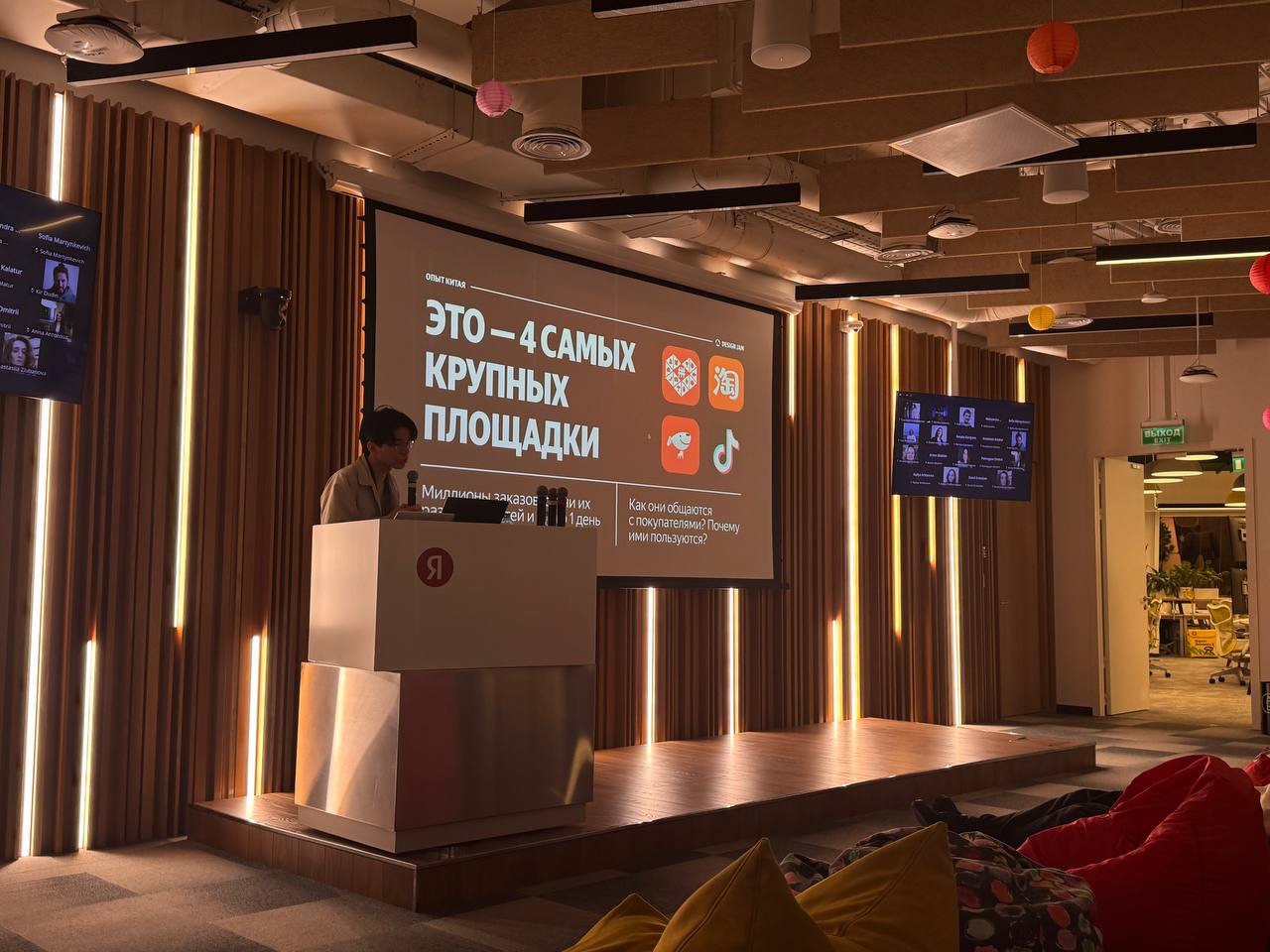
The dynamic work environment, access to industry experts, and opportunities for professional growth make Yandex an ideal place for me to refine my skills and contribute to impactful projects. I am excited about the potential to work on large-scale systems that enhance user experiences and push the boundaries of technology.
Life Goals
My degree has equipped me with advanced technical skills and a research mindset critical for roles in software architecture or R&D. My experience at Yandex and HSE’s labs further strengthens my industry readiness.
My goal is to create technology that benefits humanity—whether through scalable software solutions or ethical AI frameworks
My life motto is ‘try your best, let life decide.’ Focus on effort, and embrace uncertainty as a path to growth.
See also:

‘Economic Growth Without the AI Factor Is No Longer Possible’
The International Summer Institute on AI in Education has opened in Shanghai. The event is organised by the HSE Institute of Education in partnership with East China Normal University (ECNU). More than 50 participants and key speakers from over ten countries across Asia, Europe, North and South America have gathered to discuss the use of AI technologies in education and beyond.
Recommender Systems: New Algorithms and Current Practices
The AI and Digital Science Institute at the HSE Faculty of Computer Science hosted a conference focused on cutting-edge recommender system technologies. In an atmosphere of active knowledge sharing among leading industry experts, participants were introduced to the latest advancements and practical solutions in recommender model development.
FES Explores Collaboration Opportunities with Shanghai University
On June 27, 2025, the Faculty of Economic Sciences at HSE University hosted a delegation from the School of Economics at Shanghai University, a partner of the Faculty of Economic Sciences and the International College of Economics and Finance. The main goal of the meeting was to discuss the prospects for expanding cooperation between the partners, specifically the development of academic exchange and the organisation of joint events for students and faculty from both the School of Economics and the Faculty of Economic Sciences.
Building Bridges: Russian–Chinese Summer School on International Relations Opens
The XII Russian-Chinese Summer School on International Relations has opened at HSE University. This year’s theme is ‘Facets of the World Majority: Practice and Narratives.’ The school has brought together 27 master's and doctoral students as well as early-career researchers from leading universities in China and Russia.
AI to Enable Accurate Modelling of Data Storage System Performance
Researchers at the HSE Faculty of Computer Science have developed a new approach to modelling data storage systems based on generative machine learning models. This approach makes it possible to accurately predict the key performance characteristics of such systems under various conditions. Results have been published in the IEEE Access journal.
Roundtable on Russia–China Cooperation in Antimonopoly Policy Held at HSE University
HSE University hosted a roundtable titled ‘New Challenges for Antitrust Regulation: The Chinese Perspective.’ The event was organised by the International BRICS Competition Law and Policy Centre (BRICS Centre). Special guests included Chinese colleagues from the Competition Policy and Assessment Centre (CPAC) of the State Administration for Market Regulation of the People’s Republic of China (SAMR). Last year, the BRICS Centre and CPAC SAMR signed an agreement on strategic cooperation.
HSE and Sichuan University Sign Cooperation Agreement
On May 20, 2025, HSE University hosted an official delegation from Sichuan University headed by President Wang Jinsong. During the meeting, the universities signed a cooperation agreement.
HSE GSB MBA in Shanghai: Chinese Experience for Russian Executives
The HSE Graduate School of Business has held an international module of its MBA programme in Shanghai. The module gathered 94 participants—top managers of major Russian companies, entrepreneurs, and executives from state-owned enterprises.
AI Predicts Behaviour of Quantum Systems
Scientists from HSE University, in collaboration with researchers from the University of Southern California, have developed an algorithm that rapidly and accurately predicts the behaviour of quantum systems, from quantum computers to solar panels. This methodology enabled the simulation of processes in the MoS₂ semiconductor and revealed that the movement of charged particles is influenced not only by the number of defects but also by their location. These defects can either slow down or accelerate charge transport, leading to effects that were previously difficult to account for with standard methods. The study has been published in Proceedings of the National Academy of Sciences (PNAS).
HSE and Tsinghua University Strengthen Russia–China Partnership as part of Cross Year of Education
On May 10, a delegation from Tsinghua University—one of China’s leading higher education institutions—paid an official visit to HSE University. The delegation was led by Qiu Yong, Secretary of the CPC Tsinghua University Committee, former President and Chair of the University Council, and member of the Chinese Academy of Sciences.