

HSE and Yandex to Expand Collaboration in Training AI Specialists

Over the next ten years, the partnership between Yandex and the HSE Faculty of Computer Science (FCS) will broaden across three key areas: launching new educational programmes, advancing AI research, and exploring the application of generative neural networks in the educational process. Established by HSE University and Yandex a decade ago, the Faculty of Computer Science has since emerged as a frontrunner in training developers and experts in AI and machine learning, with a total of 3,385 graduates from the faculty over this period.
The primary areas of collaboration between HSE University and Yandex encompass education and research in computer science, machine learning, and artificial intelligence. This year, with support from Yandex, HSE University will introduce a master's programme in AI in marketing and product, while also incorporating AI as a field of study into the Modern Computer Science master's programme to train specialists in generative technologies and large language models. Additionally, interdisciplinary programmes in IT fields will be developed for social science students.
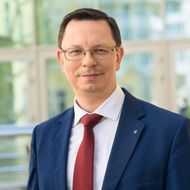
Nikita Anisimov, Rector, HSE University
For a decade, the HSE Faculty of Computer Science has been a source of cutting-edge advancements in IT, training highly skilled specialists. The best of the best enrol in the FCS as students and graduate from it. In 2023, 93 finalists and prize winners of the All-Russian Olympiad of School Students enrolled in the first year of the FCS's Bachelor's, with 73 of them joining the programme in Applied Mathematics and Information Science. Software Engineering has the highest minimum score requirement among all educational programmes at HSE University, standing at 305 points. One of the key objectives for HSE University is to strengthen training in the field of AI. Our students excel in international programming competitions and emerge as sought-after specialists in an industry that requires an in-depth understanding of future technologies. Through collaboration with major players in the artificial intelligence industry such as Yandex, HSE University will foster a new generation of AI experts capable of tackling the most challenging tasks.
The LAMBDA Laboratory of Methods for Big Data Analysis and Yandex Laboratory were created with support from Yandex. The Yandex scholarship is available for young researchers at the FCS, with the company annually supporting up to 16 students engaged in scientific work. A joint doctoral programme in artificial intelligence will open in September. In addition to this, Yandex is one of the industry partners of the HSE AI Research Centre.

Daria Kozlova, Director of Education at Yandex
Yandex and the HSE FCS were among the first in the country to initiate systematic efforts to advance IT education. Graduates of the faculty are highly sought after, both in the business world and in academia. Over the next few years, Yandex and the FCS plan to substantially broaden their collaboration in IT training. According to our projections, over the next decade, the number of graduates from Yandex programmes at the faculty is expected to quadruple compared to the last decade.
The HSE Faculty of Computer Science, in collaboration with Yandex, has been integrating AI-based tools into the educational process and research. This year, new training courses in working with neural networks will be launched for both students and faculty.
Graduates of the FCS are employed in leading Russian IT companies, engage in R&D, and establish their own start-ups and businesses. Specifically, at Yandex, these graduates work in business groups that develop services such as Search, Market, Taxi, and others. HSE University is a prominent AI research hub, ranking second among Russian universities in terms of the number of publications at A* conferences: between 2015 and 2023, a total of 168 papers were published with FCS affiliation. In the AI Alliance Russia's university ranking, HSE University holds the top position in the A+ leadership group based on criteria including graduates' employability, quality of the educational environment, and initiatives for schools.
See also:

‘Economic Growth Without the AI Factor Is No Longer Possible’
The International Summer Institute on AI in Education has opened in Shanghai. The event is organised by the HSE Institute of Education in partnership with East China Normal University (ECNU). More than 50 participants and key speakers from over ten countries across Asia, Europe, North and South America have gathered to discuss the use of AI technologies in education and beyond.
Recommender Systems: New Algorithms and Current Practices
The AI and Digital Science Institute at the HSE Faculty of Computer Science hosted a conference focused on cutting-edge recommender system technologies. In an atmosphere of active knowledge sharing among leading industry experts, participants were introduced to the latest advancements and practical solutions in recommender model development.
AI to Enable Accurate Modelling of Data Storage System Performance
Researchers at the HSE Faculty of Computer Science have developed a new approach to modelling data storage systems based on generative machine learning models. This approach makes it possible to accurately predict the key performance characteristics of such systems under various conditions. Results have been published in the IEEE Access journal.
From Neural Networks to Stock Markets: Advancing Computer Science Research at HSE University in Nizhny Novgorod
The International Laboratory of Algorithms and Technologies for Network Analysis (LATNA), established in 2011 at HSE University in Nizhny Novgorod, conducts a wide range of fundamental and applied research, including joint projects with large companies: Sberbank, Yandex, and other leaders of the IT industry. The methods developed by the university's researchers not only enrich science, but also make it possible to improve the work of transport companies and conduct medical and genetic research more successfully. HSE News Service discussed work of the laboratory with its head, Professor Valery Kalyagin.
AI Predicts Behaviour of Quantum Systems
Scientists from HSE University, in collaboration with researchers from the University of Southern California, have developed an algorithm that rapidly and accurately predicts the behaviour of quantum systems, from quantum computers to solar panels. This methodology enabled the simulation of processes in the MoS₂ semiconductor and revealed that the movement of charged particles is influenced not only by the number of defects but also by their location. These defects can either slow down or accelerate charge transport, leading to effects that were previously difficult to account for with standard methods. The study has been published in Proceedings of the National Academy of Sciences (PNAS).
‘Services Must Be Flexible’: How Governments Can Use Artificial Intelligence
The HSE International Laboratory for Digital Transformation in Public Administration held a roundtable titled ‘Artificial Intelligence in Public Administration: Current Trends.’ Scholars from Israel, China, and Russia discussed which public services AI can enhance and what key factors must be considered when adopting new technologies.
Artificial Intelligence Improves Risk Prediction of Complex Diseases
Neural network models developed at the HSE AI Research Centre have significantly improved the prediction of risks for obesity, type 1 diabetes, psoriasis, and other complex diseases. A joint study with Genotek Ltd showed that deep learning algorithms outperform traditional methods, particularly in cases involving complex gene interactions (epistasis). The findings have been published in Frontiers in Medicine.
Artificial Intelligence as a Catalyst for Sustainable Development
Artificial intelligence is transforming every aspect of life, expanding both our capabilities and our boundaries. At the same time, it presents new challenges for humanity, including concerns about safety, ethics, and environmental sustainability. Today, each neural network leaves a significant carbon footprint. However, with responsible management, AI has the potential to benefit the planet and become a cornerstone of a sustainable future economy. Panos Pardalos, Academic Supervisor of the Laboratory of Algorithms and Technologies for Network Analysis at the HSE Campus in Nizhny Novgorod, emphasised this point as he addressed the XXV Yasin (April) International Academic Conference on Economic and Social Development.
HSE Develops Its Own MLOps Platform
HSE researchers have developed an MLOps platform called SmartMLOps. It has been created for artificial intelligence researchers who wish to transform their invention into a fully-fledged service. In the future, the platform may host AI assistants to simplify educational processes, provide medical support, offer consultations, and solve a wide range of other tasks. Creators of AI technologies will be able to obtain a ready-to-use service within just a few hours. Utilising HSE’s supercomputer, the service can be launched in just a few clicks.
‘HSE’s Industry Ties Are Invaluable’
Pan Zhengwu has spent the last seven years at HSE University—first as a student of the Bachelor’s in Software Engineering and now in the Master’s in System and Software Engineering at the Faculty of Computer Science. In addition to his busy academic schedule, he works as a mobile software engineer at Yandex and is an avid urban photographer. In his interview with the HSE News Service, Zhengwu talks about the challenges he faced when he first moved to Russia, shares his thoughts on ‘collaborating’ with AI, and reveals one of his top spots for taking photos in Moscow.