

International Laboratory of Social Neurobiology to Look at How Fake News Affects Human Behaviour
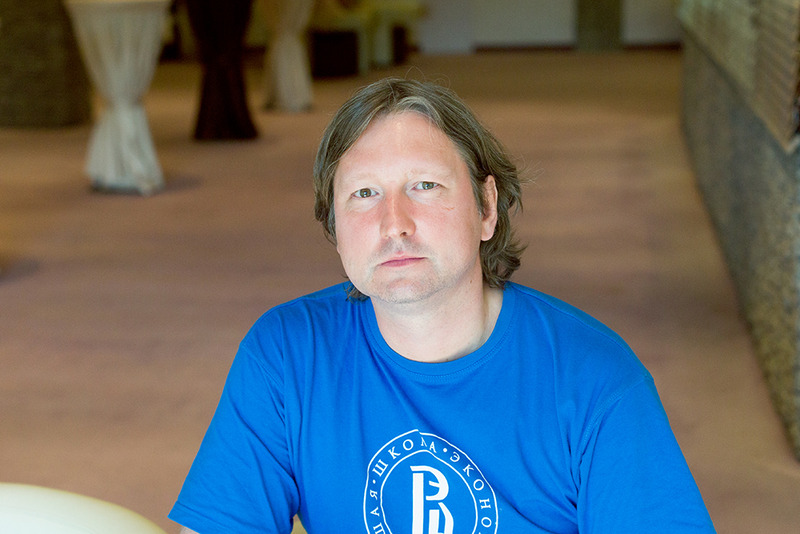
The mega-grant allocated by the Russian government to the International Laboratory of Social Neurobiology, has been extended for 2022-23. The laboratory was founded two years ago and is headed by Iiro Jaaskelainen, a leading neurobiologist from Finland. Laboratory Head Vasily Klucharev spoke to the HSE News Service about the results the lab has already achieved and the prospects for the next two years.
In a very short amount of time, we have managed to create the first world-class Russian laboratory that studies how our brain perceives social information and makes social decisions.
An important area of our work is related to economic behaviour. We study not only how our brain operations affect our economic decisions, but also how our decisions impact our brain. We are looking closely at the ideas of Nobel prize winner Robert Shiller, who believes that many things in our behaviour, including economic behaviour, depend on the narratives we hear around us. All these stories motivate (or demotivate) people in terms of certain economic actions.
Another important area is the study of social norms, and we have already received some interesting results here. For example, our researcher Oksana Zinchenko studied whether we are egoists or altruists by nature. Some academics believe that people have an inherent social motive to care about each other. Others say that people are natural egoists, and when they care, they have to suppress this intrinsic trait. Our study proves that, more likely than not, people are naturally inclined to help others. We were able to temporarily suppress cortical activity in the experiment participants and observe the changes in their prosocial behaviour.
I have to say that many brain studies have demonstrated the crucial role of the cortex in self-control processes. The question arises: if we suppress the neurobiological mechanisms of self-control in a human, will they become more of an altruist or more of an egoist? The ‘intuitive’ altruism theory suggests that cortex suppresses the intuitive altruistic behaviour, while the ‘reflexive’ theory assumes that cortex suppresses our egoistic impulses.
If the first theory is true, suppressing the cortex should increase the experiment participants’ generosity. According to the second theory, suppressing the cortex, on the contrary, would lead to egoistic behaviour. Our results showed that temporal suppression of the cortex through the use of transcranial magnet stimulation (TMS) increased altruistic behaviour: people shared with strangers more, particularly when this altruism demanded minimal personal cost from them. Our results confirm the ‘intuitive’ theory of altruism, which says that people are intuitive altruists, and suppression of the self-control system releases their natural pursue of justice.
I would also like to mention our fruitful cooperation with Aalto University, Finland: its researchers help us master the most cutting-edge methods for registering and processing the activity of the human brain and have assisted us in implementing machine learning methods in cognitive neurobiology studies. I was particularly happy to hear our Academic Supervisor Iiro Jaaskelainen say that ‘a similar intellectual atmosphere, and students as talented as those here, can probably only be found at Harvard’.
Over the next two years, the International Laboratory of Social Neurobiology will study how social disinformation (fake news) is perceived by people and how it can affect their behaviour. For this project, we are going to collaborate with our colleagues in media communications and computer science. We are going to use a method of studying brain activity in media narrative perception that is new for Russia.
We will use inter-subject correlation analysis to see how brain activity is synchronized in a group of people who are watching the same video, such as news coverage, or are listening to an audio message. This method will help us see synchronized activity in people who watch viral fake news, in order to better understand which parts of the message have the strongest impact on viewers.
We are also going to look for approaches in media literacy teaching that can promote critical perception of fake news. Semantic analysis of associations caused by fake news, through the use of the most up-to-date computer algorithms, will help us better understand the effects of disinformation on our perception. We hope that during the next stage of the project, we will be able to uncover the mechanisms of how the digital social environment, which is full of both true and false information, affects our brain.
See also:

When Thoughts Become Movement: How Brain–Computer Interfaces Are Transforming Medicine and Daily Life
At the dawn of the 21st century, humans are increasingly becoming not just observers, but active participants in the technological revolution. Among the breakthroughs with the potential to change the lives of millions, brain–computer interfaces (BCIs)—systems that connect the brain to external devices—hold a special place. These technologies were the focal point of the spring International School ‘A New Generation of Neurointerfaces,’ which took place at HSE University.
‘It’s Thrilling to Have an Opportunity to Discuss Your Scientific Ideas with Interested People’
The International Laboratory of Dynamical Systems and Applications at HSE University–Nizhny Novgorod conducts in-depth theoretical and applied research, including the study of ocean waves, solar corona reconnections, volcanic phenomena, and ship stability. The lab’s researchers, who have received more than 20 significant research grants over the past five years, actively cooperate with Russian and international colleagues from China, Spain, the USA, the UK, Brazil, and other countries. Prof. Olga Pochinka spoke to the HSE News Service about the laboratory’s work.
How the Brain Responds to Prices: Scientists Discover Neural Marker for Price Perception
Russian scientists have discovered how the brain makes purchasing decisions. Using electroencephalography (EEG) and magnetoencephalography (MEG), researchers found that the brain responds almost instantly when a product's price deviates from expectations. This response engages brain regions involved in evaluating rewards and learning from past decisions. Thus, perceiving a product's value is not merely a conscious choice but also a function of automatic cognitive mechanisms. The results have been published in Frontiers in Human Neuroscience.
Electrical Brain Stimulation Helps Memorise New Words
A team of researchers at HSE University, in collaboration with scientists from Russian and foreign universities, has investigated the impact of electrical brain stimulation on learning new words. The experiment shows that direct current stimulation of language centres—Broca's and Wernicke's areas—can improve and speed up the memorisation of new words. The findings have been published in Neurobiology of Learning and Memory.
HSE Researchers Discover Simple and Reliable Way to Understand How People Perceive Taste
A team of scientists from the HSE Centre for Cognition & Decision Making has studied how food flavours affect brain activity, facial muscles, and emotions. Using near-infrared spectroscopy (fNIRS), they demonstrated that pleasant food activates brain areas associated with positive emotions, while neutral food stimulates regions linked to negative emotions and avoidance. This approach offers a simpler way to predict the market success of products and study eating disorders. The study was published in the journal Food Quality and Preference.
HSE Neurolinguists Create Russian Adaptation of Classic Verbal Memory Test
Researchers at the HSE Centre for Language and Brain and Psychiatric Hospital No. 1 Named after N.A. Alexeev have developed a Russian-language adaptation of the Rey Auditory Verbal Learning Test. This classic neuropsychological test evaluates various aspects of auditory verbal memory in adults and is widely used in both clinical diagnostics and research. The study findings have been published in The Clinical Neuropsychologist.
Researchers at HSE Centre for Language and Brain Reveal Key Factors Determining Language Recovery in Patients After Brain Tumour Resection
Alina Minnigulova and Maria Khudyakova at the HSE Centre for Language and Brain have presented the latest research findings on the linguistic and neural mechanisms of language impairments and their progression in patients following neurosurgery. The scientists shared insights gained from over five years of research on the dynamics of language impairment and recovery.
Neuroscientists Reveal Anna Karenina Principle in Brain's Response to Persuasion
A team of researchers at HSE University investigated the neural mechanisms involved in how the brain processes persuasive messages. Using functional MRI, the researchers recorded how the participants' brains reacted to expert arguments about the harmful health effects of sugar consumption. The findings revealed that all unpersuaded individuals' brains responded to the messages in a similar manner, whereas each persuaded individual produced a unique neural response. This suggests that successful persuasive messages influence opinions in a highly individual manner, appearing to find a unique key to each person's brain. The study findings have been published in PNAS.
'We Are Creating the Medicine of the Future'
Dr Gerwin Schalk is a professor at Fudan University in Shanghai and a partner of the HSE Centre for Language and Brain within the framework of the strategic project 'Human Brain Resilience.' Dr Schalk is known as the creator of BCI2000, a non-commercial general-purpose brain-computer interface system. In this interview, he discusses modern neural interfaces, methods for post-stroke rehabilitation, a novel approach to neurosurgery, and shares his vision for the future of neurotechnology.
Smoking Habit Affects Response to False Feedback
A team of scientists at HSE University, in collaboration with the Institute of Higher Nervous Activity and Neurophysiology of the Russian Academy of Sciences, studied how people respond to deception when under stress and cognitive load. The study revealed that smoking habits interfere with performance on cognitive tasks involving memory and attention and impairs a person’s ability to detect deception. The study findings have been published in Frontiers in Neuroscience.