

Keep Your Eyes On: A Prospective Device for Self-Monitoring Vision
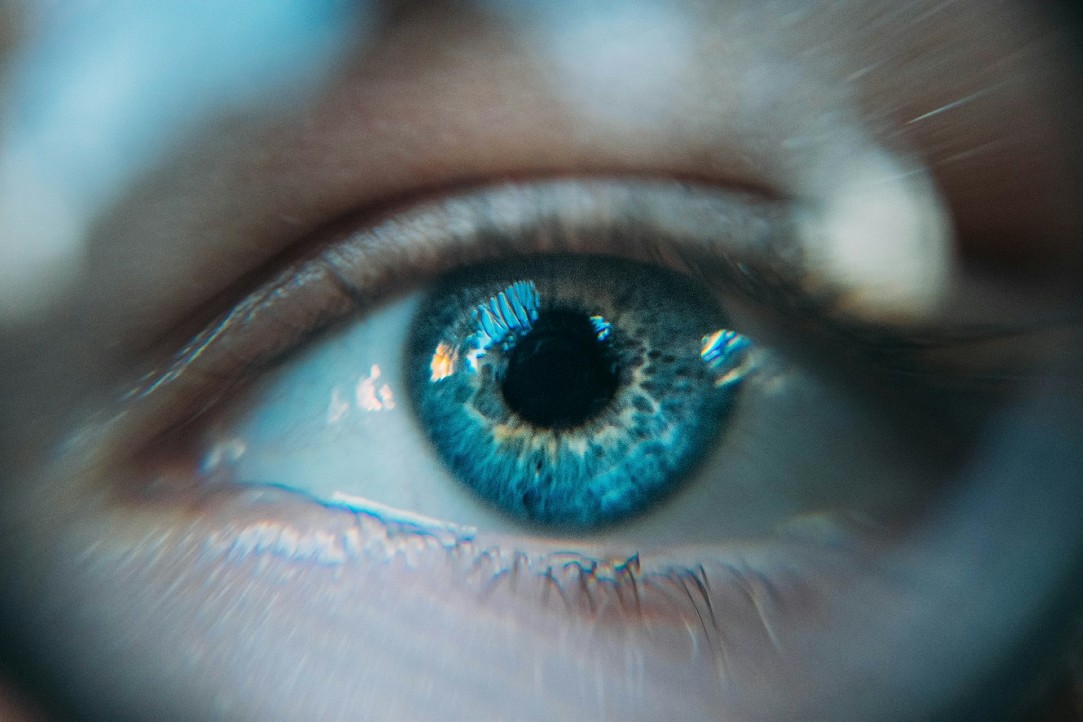
As part of the Strategic Project 'Success and Self-Sustainability of the Individual in a Changing World,' scientists at HSE University have conducted a study to develop an electronic device designed to reduce the risk of occurrence and progression of eye diseases.
In the digital age, the continuous use of gadgets and prolonged exposure to digital screens exacerbate health risks and are increasingly recognised as a public health problem. Statistics reveal that the number of hours spent in front of screens has increased dramatically over the past decade. Researchers worldwide attribute the increasing incidence of myopia in children and adolescents to this particular trend.
According to a survey conducted in Western Europe, only 50% of respondents regularly have their eyesight checked, while others tend to ignore early symptoms of visual impairment, which can eventually lead to serious vision problems, such as the progression of myopia in adolescents and hyperopia in adults. Using a personal device for self-monitoring vision can help prevent the progression of certain eye diseases: recent studies in Australia confirm that early detection of vision problems leads to better treatment outcomes and helps prevent the disease from worsening.
Pavel Korolev, in collaboration with a group of scientists, have begun developing a device for monitoring one's vision without the need to consult a healthcare provider. Their work is carried out in the framework of the Strategic Project 'Success and Self-Sustainability of the Individual in a Changing World.'
The researchers have published a report in which they analyse the structure of the human eye, vision parameters along with their normal values, monitoring methods, software and hardware for measuring eye parameters, as well as diseases, symptoms, and pathologies of the organ. As a result, the scientists have identified the primary requirements for a prospective device intended for independent vision monitoring.
The team working on the project is developing an electronic device capable of providing recommendations for eye rest and alerting the person to the need of consulting a healthcare provider if a visual impairment is detected. The goal is to help people mitigate the risks of developing eye diseases and prevent their progression. According to Pavel Korolev and the team, this can have a positive effect on overall human health by improving emotional well-being, interactions with the outside world and other people, safety at work and at home and productivity, and by slowing down the aging of the brain.
The scientists focus on the key parameters of human vision: intraocular pressure, field of vision, colour perception, visual acuity, visual evoked potentials, and eye refraction. Most existing devices for measuring these parameters are certified medical equipment, which is not always accessible for self-use and often necessitates professional assistance.
During the study, the scientists also determined that the critical flicker fusion frequency (cFFF) can be measured independently by an individual, while serving as an indicator of visual acuity. The cFFF refers to the frequency at which light flashes must occur for the human eye to perceive them as continuous light. This parameter can be used to assess the clarity and vividness with which a person perceives images in front of their eyes. Developing a self-monitoring device capable of measuring cFFF can mitigate the risk of undiagnosed glaucoma, cataracts, and other eye diseases.
Therefore, the development of a personal device for self-monitoring vision, aligning with the trend of digital medicine, can become a public health solution, offering potential benefits for promoting health and well-being in the digital age.
The prospective device will be particularly relevant for the at-risk group, including children, adolescents, and adults who spend prolonged periods working at a computer or handling small items. Furthermore, this technology can benefit individuals undergoing treatment or rehabilitation for optic nerve diseases, as it will help monitor the eye's ability to visualise and process information, enabling timely identification of complications or relapses. As an additional benefit, the device will not only assist patients but also alleviate the burden on healthcare providers.
See also:

Centre for Language and Brain Begins Cooperation with Academy of Sciences of Sakha Republic
HSE University's Centre for Language and Brain and the Academy of Sciences of the Republic of Sakha (Yakutia) have signed a partnership agreement, opening up new opportunities for research on the region's understudied languages and bilingualism. Thanks to modern methods, such as eye tracking and neuroimaging, scientists will be able to answer questions about how bilingualism works at the brain level.
HSE Develops Its Own MLOps Platform
HSE researchers have developed an MLOps platform called SmartMLOps. It has been created for artificial intelligence researchers who wish to transform their invention into a fully-fledged service. In the future, the platform may host AI assistants to simplify educational processes, provide medical support, offer consultations, and solve a wide range of other tasks. Creators of AI technologies will be able to obtain a ready-to-use service within just a few hours. Utilising HSE’s supercomputer, the service can be launched in just a few clicks.
HSE Researchers Develop Python Library for Analysing Eye Movements
A research team at HSE University has developed EyeFeatures, a Python library for analysing and modelling eye movement data. This tool is designed to simplify the work of scientists and developers by enabling them to efficiently process complex data and create predictive models.
New Science: How Early-Career Researchers Reach New Heights
In the context of increasing global competition, countries arestriving to ensure technological sovereignty. Those who can ensure economic development and concentrate intangible assets and human capital are emerging as leaders. The growing demand for qualified staff leads to an increase in the role of universities and the demand for early-career scientists. The challenges and opportunities for prospective specialists in the scientific community were discussed at the ‘StratPro Platform’ strategic session at HSE University.
Neuroscientists Reveal Anna Karenina Principle in Brain's Response to Persuasion
A team of researchers at HSE University investigated the neural mechanisms involved in how the brain processes persuasive messages. Using functional MRI, the researchers recorded how the participants' brains reacted to expert arguments about the harmful health effects of sugar consumption. The findings revealed that all unpersuaded individuals' brains responded to the messages in a similar manner, whereas each persuaded individual produced a unique neural response. This suggests that successful persuasive messages influence opinions in a highly individual manner, appearing to find a unique key to each person's brain. The study findings have been published in PNAS.
Five Strategies for the Future: Key Achievements of HSE Strategic Projects in 2024
During the past year, scientists at HSE University have worked on five strategic projects aimed at advancing key areas essential to the development of modern individuals and society. Each of these projects is unique, yet they share common goals: creating innovative product solutions, generating fresh ideas for the economy, social sector, science, and education, and contributing to the university's research potential.
'We Are Creating the Medicine of the Future'
Dr Gerwin Schalk is a professor at Fudan University in Shanghai and a partner of the HSE Centre for Language and Brain within the framework of the strategic project 'Human Brain Resilience.' Dr Schalk is known as the creator of BCI2000, a non-commercial general-purpose brain-computer interface system. In this interview, he discusses modern neural interfaces, methods for post-stroke rehabilitation, a novel approach to neurosurgery, and shares his vision for the future of neurotechnology.
Humans, Bots, and Digital Twins: Year-End Results of the Strategic Project 'Human Brain Resilience'
HSE University hosted a joint research seminar to review the 2024 results of the Strategic Project 'Human Brain Resilience: Neurocognitive Technologies for Adaptation, Learning, Development and Rehabilitation in a Changing Environment.' The event showcased the progress and outcomes of fundamental and applied projects focused on developing technologies for neurodiagnostics, neuroadaptation, and neurorehabilitation—collectively known as 3N technologies. The objective is to develop tools that can help prevent neurogenic and psychiatric disorders or alleviate their consequences.
Healthy Nutrition Saves Public Funds: Strategies to Reduce Healthcare Costs in Russia
In Russia, the annual cost of treating type 2 diabetes alone exceeds 500 billion roubles. Promoting healthy nutrition programmes can ease the burden on the healthcare system and increase life expectancy. This was the conclusion reached by economists at HSE University after analysing global experiences with government involvement in promoting a healthy lifestyle.
HSE and Integration Education Centre to Develop New Programmes for Agrobiotech Advancement
HSE University and ANO Integration plan to jointly develop projects aimed at creating new approaches to education and advancing innovative agrobiotechnologies. The parties signed the corresponding agreement at the XI Congress ‘Innovative Practice: Science Plus Business.’